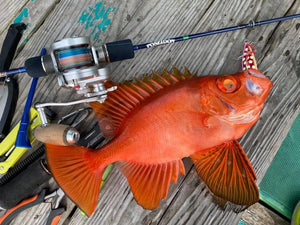
"Shore fishing" (isozuri), where you can enjoy fishing while gazing at the sea, is one of the most popular methods of sea fishing.
Shore fishing is recommended for beginners because anyone can start it easily.
However, even for simple shore fishing, it is necessary to know the basic knowledge and principles before actually starting. Since you are dealing with nature, you might get caught up in unexpected trouble.
This time, we will explain the "basics" and "principles" of shore fishing for those who are starting out.
We will also touch upon recommended equipment for beginners, so those who are struggling with choosing equipment should definitely refer to this.
Table of Contents
- [1. "Basics" and "Principles" to Cherish in Shore Fishing]
- [2. The "Basics" of Shore Fishing]
- [3. The "Principles" of Shore Fishing]
- [4. Recommended Equipment for Beginner Shore Fishers]
- [Summary]
[1. "Basics" and "Principles" to Cherish in Shore Fishing]
Since shore fishing is done facing the sea, you never know when an accident might occur.
First, let's firmly grasp the "basics" and "principles" that should be cherished in shore fishing.
[2. The "Basics" of Shore Fishing]
While catching a big fish is important in shore fishing, the fundamental principle is to prioritize protecting your life.
Therefore, the two important things when starting shore fishing are "checking the weather on the day" and "protective equipment."
There are two types of shore fishing: "ji-iso," which can be reached on foot from the land, and "oki-iso," which involves fishing on isolated reefs that can only be accessed by boat. In either case, checking the weather beforehand is essential.
If there is a low-pressure system or typhoon over the ocean, there is a risk of high waves offshore, and strong winds could cause you to fall into the water. Also, depending on the wind direction, areas that experience high waves and those that are calm may change, which can affect fishing spots and catches.
Furthermore, shore fishing often involves walking on unstable ground such as rocks, so it is necessary to be careful of falling or slipping into the water. A "floating vest" is recommended as protective gear. It has many pockets, making it useful for storing tools, and in the event of falling into the water, it acts as a life vest.
Also, choose shoes that protect your feet and are highly waterproof with non-slip soles.
[3. The "Principles" of Shore Fishing]
What I want you to know about the principles of shore fishing is to observe manners and rules.
Especially in popular shore fishing spots, it is important for everyone to be considerate of others so as not to cause inconvenience. Even if you think "I'm fine," you might be unknowingly bothering others.
For example, making noise or aggressively cutting in line are things that can easily happen without realizing it. When listening to a radio, it is best to use earphones to avoid disturbing others. Also, at fishing spots, those who arrived first have priority, so avoid trying to squeeze in between people. If disputes over spots lead to arguments, it will spoil the fun of shore fishing.
Furthermore, it is basic etiquette to take your trash with you after fishing. Eating while gazing at the sea with a plastic bottle or bento box is exceptional, but leaving trash behind will spoil the scenery.
[4. Recommended Equipment for Beginner Shore Fishers]
Here, we will introduce recommended equipment for beginner shore fishers.
Once you have gathered the equipment to protect yourself, let's move on to gathering the tools for actually catching prey.
Rod (Fishing Rod)
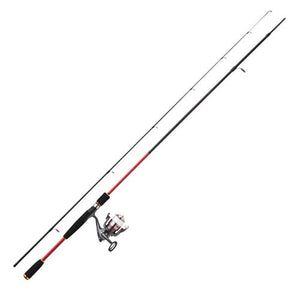
Rods used for shore fishing are generally called "iso-zao" (shore fishing rods).
When choosing an iso-zao, focus on the stiffness and length of the rod to select a size that is perfect for you. The stiffness of the rod is referred to by a unit called "go-su" (number), and the larger the number, the stiffer and heavier the fishing rod.
The most standard size for an iso-zao is 1.5-go and 5.3m. While it's common to choose an iso-zao based on the size of the target catch, this standard size should allow you to catch a certain variety of fish.
Also, in shore fishing, where you often walk on uneven ground, don't forget to purchase a "rod case" to store your rod. There are various types, such as those that can be carried on the shoulder or diagonally across the body, so choose according to your preference.
Lures
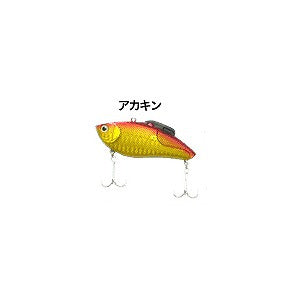
Choosing lures is also one of the joys of shore fishing, isn't it? Lures, many of which are colorful imitations of fish, are endlessly fascinating to look at.
The shape and weight of a lure can significantly affect the casting distance. A lure weighing approximately 20g is recommended for beginners.
Also, how you move the lure is important in lure fishing. For example, for horse mackerel fishing, there is a method called "ajingu," and for bigfin reef squid, there is a method called "eging."
If you want to target specific prey, why not research fishing methods along with choosing your lures?
[Summary]
In shore fishing, "basics" for protecting yourself and "principles" for showing consideration to others are of utmost importance.
Also, there is a wide range of equipment available for beginners in shore fishing, so I hope you can find the right tools for you by referring to the information provided this time.