



Mar 30, 2026
[New Standards] Motorcycle Engine Displacement Categories: Maintenance Costs, Traffic Rules, and Licenses for Each Displacement
[For Beginners] A Step-by-Step Guide to Filling Up Your Motorcycle with Gas! Including Precautions and Risks

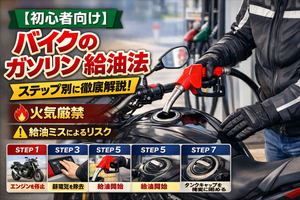
How to Refuel Your Motorcycle
Source: https://pixabay.com/ja/photos/97-1275484/
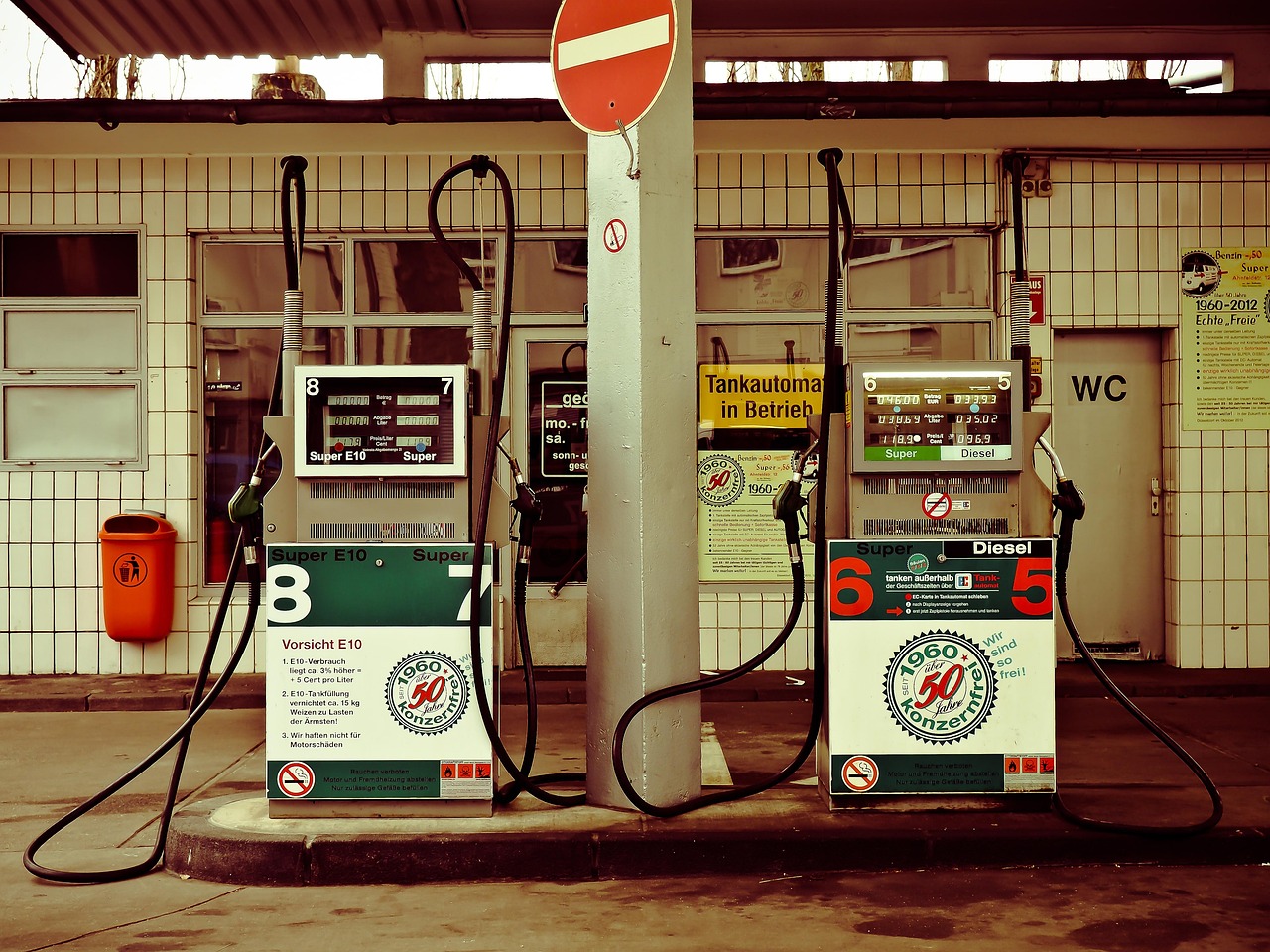
As self-service gas stations become more common, so does the opportunity to refuel your motorcycle yourself. However, incorrect refueling methods can lead to unexpected accidents such as fires or motorcycle breakdowns.
Mishandling fuel carries a risk of fire, and using the wrong type of fuel can lead to engine failure. To avoid accidents and breakdowns, it's crucial to properly understand how to refuel your motorcycle.
【Prerequisite】Pre-check
Before you refuel your motorcycle yourself, first check "which fuel type should be used" for your motorcycle.
The type of fuel to be used (fuel type) is listed in the motorcycle's owner's manual and also on the gas tank cap.
Many domestic motorcycles use "regular gasoline," while many domestic sports bikes and imported vehicles specify "premium gasoline."
Other confirmation points
To prevent overfilling, checking the fuel tank capacity can serve as a guide when refueling.
Payment methods at most self-service gas stations include cash, credit cards, e-money, and QR code payments.
While cash is accepted at almost all gas stations, the availability of credit cards and other payment methods varies by store, so be sure to check at the pump.
STEP 1. Adjust motorcycle parking position
Once you arrive at the gas station, first park your motorcycle where the fuel nozzle can reach, turn off the engine, and then firmly stabilize it using either the side stand or center stand.
If you use the side stand, the motorcycle will be tilted, which might result in slightly less fuel being dispensed than the tank's actual capacity.
Parking too close or too far from the nozzle will make refueling difficult, so aiming for about 50-60cm away will allow for smooth refueling.
Precautions
Once you've parked your motorcycle, always turn off the engine, remove your helmet, and dismount the motorcycle to refuel.
Refueling with the engine running carries a risk of fire and is legally mandated to be done with the engine off, so always turn off your engine before refueling.
It is also mandatory to dismount the motorcycle to refuel, so always get off your motorcycle before refueling.
STEP 2. Select fuel type and refueling method
The fuel type for motorcycles is almost always either "regular gasoline" or "premium gasoline." (A very small number of older military motorcycles may have diesel engines.)
On the fuel pump panel, select the fuel type specified for your motorcycle, then choose to fill up completely, specify a quantity (e.g., up to 10L), or specify an amount (e.g., for ¥1,000).
After selecting the fuel type and amount, choose your payment method (cash, credit card, etc.) and complete the payment process.
The fuel type specified for your motorcycle can be found in the owner's manual, on the manufacturer's website, or on the gas cap, so be sure to check it.
STEP 3. Touch the static removal pad
After selecting the fuel type at the pump, once it's ready to refuel, always touch the "static electricity removal pad (sheet)" provided on the pump to discharge static electricity.
Gasoline is a dangerous substance that can ignite with even a small static spark, so be sure to touch the static removal pad to discharge static electricity.
If you neglect this duty and cause a fire, in the worst-case scenario, you could be held responsible for the accidental fire and face severe penalties.
STEP 4. Open the tank cap
After touching the static removal pad, open the gas tank cap to refuel.
Many motorcycles have caps that open by inserting a key and turning it to the left, and most tank caps are either removable or hinged.
If the tank cap is removable, do not hold it in your hand while refueling; instead, place it on the tank cap holder at the pump for easier handling.
STEP 5. Lift the nozzle and start refueling
After opening the gas tank cap, pick up the fuel nozzle, gently insert it into the fuel filler opening, and lightly squeeze the trigger.
The basic rule for refueling is to take your time and do it slowly. Start by lightly squeezing the nozzle to observe the flow. As the fuel level rises, gradually ease off the nozzle.
The tip of the fuel nozzle has a sensor that stops the fuel supply when it detects gasoline, so if you're worried about overfilling, ending refueling as soon as the supply stops is an option.
Refuel for up to 4 minutes
At self-service gas stations, the maximum time allowed for a single refueling is 4 minutes (the 4-minute rule).
The fuel pump automatically stops if refueling exceeds 4 minutes. A single refueling operation is limited to "a refueling time of 4 minutes or less" and "a maximum of 100 liters of gasoline."
Motorcycles require less fuel than cars, so it's unlikely to reach the 4-minute refueling limit, but once refueling starts, finish the process as quickly as possible.
STEP 6. Prevent overflow and spillage
Overfilling with gasoline is dangerous because it can spill, so stop refueling when the gasoline reaches the lower rim of the tank.
If the gasoline appears to be "right at the brim" of the tank, it's overfilled and could spill while riding, so it's best to stop with a little room to spare.
Many motorcycles are designed to release excess gasoline if overfilled, and overfilling can cause gasoline to flow out from the bottom of the motorcycle body.
STEP 7. Close the cap
Once you've added an appropriate amount of fuel, securely close the gas tank cap by reversing the steps you took to open it.
Forgetting to close it can lead to gasoline spilling while riding, which poses a fire risk, and may also leave a gasoline odor around the tank.
Also, gasoline can volatilize even below -40 degrees Celsius and explode due to static electricity or sparks, so be sure to check carefully.
STEP 8. Final check before departure
Before you depart, reconfirm the following points:
- Is the gas tank cap securely closed?
- Is the fuel nozzle returned to the pump?
- Is the kickstand up?
If the tank cap is not closed, there is a risk of gasoline leakage. If the fuel nozzle is not properly returned, refueling will not be completed, and payment may not be possible.
Additionally, if the center stand or side stand is not retracted, a sensor may prevent the engine from starting, so please check.
Precautions when refueling a motorcycle
Source: https://pixabay.com/ja/photos/ad-2077914/
When refueling a motorcycle, failing to observe precautions can lead to fires or engine damage.
Even seemingly trivial actions can sometimes constitute a legal violation, so if you use a self-service gas station, be sure to keep the following points in mind.
Absolutely essential "Safety precautions"
Gasoline is a hazardous substance that can ignite even at temperatures below -40 degrees Celsius. When refueling, there are safety precautions to prevent accidents such as fires, as listed below:
- Always turn off the engine
- Touch the static removal pad
- Do not use smartphones or lighters while refueling
- Dismount the vehicle to refuel (mandatory at self-service stations)
Let's examine each precaution in detail.
① Always turn off the engine
When refueling with gasoline, whether at a self-service or full-service station, it is mandatory to turn off the engine.
Refueling with the engine running is a violation of the law and is extremely dangerous, as it can cause fires due to static electricity or heat.
Also, turning off the engine helps prevent accidental starts, so always turn off your engine while refueling.
② Touch the static removal pad
To prevent fires during refueling, always touch the "static electricity removal pad (sheet)" provided on the fuel pump before refueling.
Gasoline is a highly volatile and dangerous substance that evaporates even at -40 degrees Celsius, constantly producing flammable vapors. This makes it susceptible to ignition from static electricity.
Static electricity can sometimes build up due to friction between clothing and the seat or bags when getting on and off the motorcycle, so touch the static removal pad to discharge it before refueling.
③ Do not use smartphones or lighters while refueling
During refueling, using lighters that produce flames is prohibited, and so is using smartphones.
Lighters have a high risk of ignition, and smartphones pose a risk of ignition due to electromagnetic waves or static electricity with the panel.
Furthermore, smartphone signals can interfere with the fuel dispenser, or focusing on your phone might distract you from refueling, leading to accidents like spilling gasoline. For these reasons, using a smartphone while refueling is prohibited.
④ Dismount the vehicle to refuel (mandatory at self-service stations)
At self-service gas stations, it is mandatory to dismount your motorcycle to refuel.
Fire service laws and safety standards at each gas station mandate that "the engine must be turned off and the rider must dismount the motorcycle during refueling."
Most self-service gas stations display warnings and provide audio guidance, so be sure to dismount your motorcycle to refuel.
Precautions for preventing overfilling and spillage
Overfilling with gasoline not only poses a fire risk due to the vehicle body being wet with fuel but can also leave a lingering odor.
By following the tips below, you can prevent overfilling or spilling gasoline, so please refer to them.
- Do not fill to the absolute brim
- Refuel slowly
- Wipe up spills immediately
- Securely close the tank cap
① Do not fill to the absolute brim
Filling the gas tank right to the very brim of the filler opening increases the likelihood of gasoline spilling when you close the cap or due to vibrations while riding.
If you don't fill the gasoline to the absolute brim, and instead stop when the liquid level is about 1-2 cm from the filler opening, gasoline won't overflow.
Especially on hot days, gasoline expands and is more likely to overflow, so avoid filling the tank to the very brim of the filler opening and leave a little room.
② Refuel slowly
If you refuel gasoline too quickly, it can foam or splash back. By slowing down the flow rate, you can more easily prevent these issues.
Since the area directly below the filler opening can be narrow, refilling with too much force can create turbulence inside and cause splash-back, so it's fundamental to refuel slowly.
Additionally, refueling slowly makes it easier to control the amount of fuel and reduces the chance of overflow, so refuel slowly and carefully.
③ Wipe up spills immediately
If you spill gasoline while refueling, stop immediately and wipe up the gasoline.
Wiping rags may be provided at the gas station, so press the intercom or attendant call button on the pump and inform the attendant that you've spilled gasoline.
If gasoline gets on the motorcycle body, it can cause paint deterioration, so wash the motorcycle as soon as possible.
④ Securely close the tank cap
After refueling, ensure the gas tank cap is securely closed.
If the cap is not securely closed, problems such as gasoline overflowing from the filler opening can occur.
After refueling, securely lock the cap and reconfirm that it is firmly closed before departing.
Precautions for fuel type and refueling errors
When refueling at a self-service gas station, using the wrong type of fuel can, in the worst case, lead to motorcycle engine failure.
Motorcycle fuel is basically either regular or premium gasoline, so be careful not to mistakenly refuel with a different type.
① Check your motorcycle's "fuel type"
The fuel for motorcycles is either regular gasoline or premium gasoline, and which one to use depends on the motorcycle model.
The type of fuel to be used can be found in the motorcycle's owner's manual or in the online owner's manual provided by the motorcycle manufacturer, so be sure to check before refueling.
For current models on sale, the fuel type is listed on the specifications and technical data pages of the manufacturer's official website.
② Diesel (light oil) is absolutely NOT allowed
Light oil (diesel) is "fuel for diesel engines" and not for motorcycles or light vehicles like kei cars, so when refueling at a self-service station, special attention is needed to avoid fuel type errors.
Some people mistakenly believe "light oil" is for light vehicles like motorcycles or kei cars and refuel with diesel, but mistakenly putting diesel into a gasoline-powered vehicle will cause engine failure.
When refueling a motorcycle at a self-service station, it should be either regular or premium gasoline (depending on the model), so be careful not to choose the wrong fuel type when refueling.
Recommended Products
Latest Articles

Popular product


×
![]()