



Mar 30, 2026
[New Standards] Motorcycle Engine Displacement Categories: Maintenance Costs, Traffic Rules, and Licenses for Each Displacement
Protect Your Motorcycle from Typhoons! A Complete Guide to Preventing Falls, Waterproofing, and Post-Typhoon Checks!
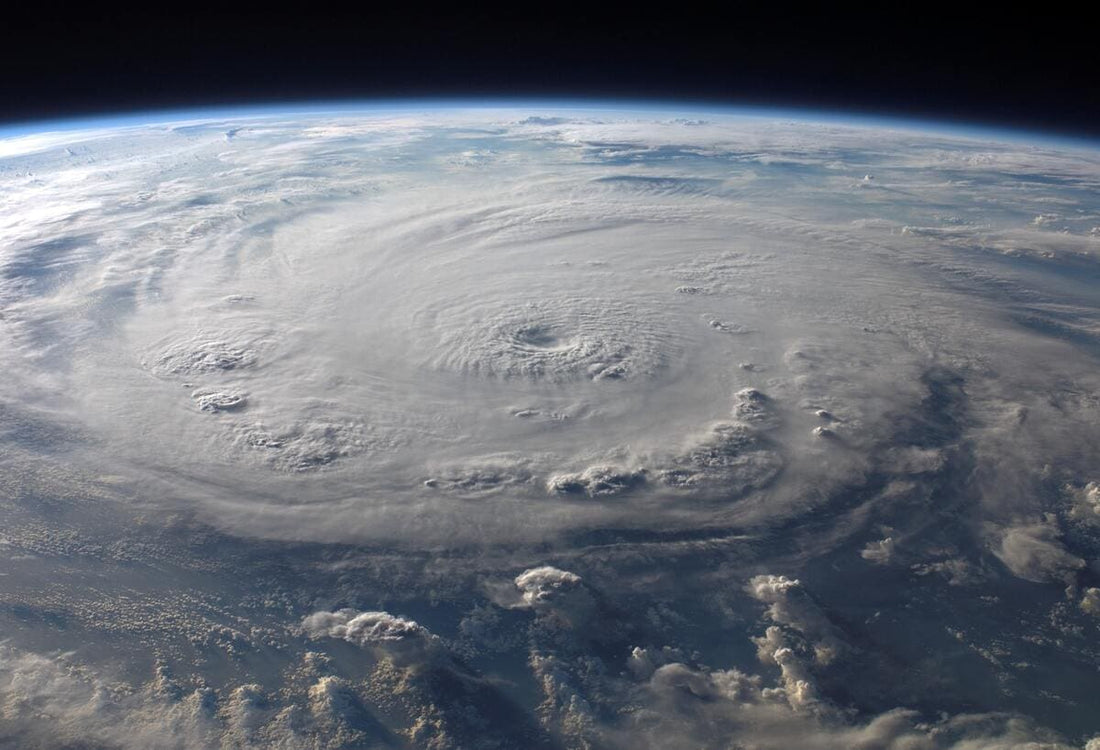
I want to protect my motorcycle from the typhoons that come every year!

Source: https://www.pexels.com/ja-jp/photo/76969/
Typhoons, which arrive every year from summer to autumn, bringing strong winds and rain, are the natural enemy of motorcycles parked outdoors.
This article explains how to store your motorcycle during a typhoon, how strong the wind needs to be to knock over a motorcycle, what measures to take for your motorcycle during a typhoon, and how fast the wind needs to be for a motorcycle to fall over, as well as other knowledge and countermeasures for motorcycles during typhoons.
Please refer to this article to take the necessary precautions for your motorcycle during a typhoon and protect your beloved bike from the storm.
10 Ways to Prevent Your Motorcycle from Tipping Over

Source: https://www.pexels.com/ja-jp/photo/5184920/
Many people worry that their motorcycle might be knocked over by strong winds during a typhoon.
The best countermeasure against typhoons is to "park indoors under a roof," but indoor parking might be difficult depending on your living environment.
Therefore, in this section, we will introduce 10 ways to protect an outdoor-parked motorcycle from typhoons.
1. Remove the motorcycle cover.
During strong winds, such as typhoons, it's best to remove the motorcycle cover.
The motorcycle cover increases the surface area, making it more susceptible to strong winds and increasing the risk of it falling over.
If you absolutely must use a cover, tie it down securely with ropes to prevent it from flapping and minimize the surface area as much as possible.
Also, if the cover flaps in strong winds, the motorcycle can get scratched by the cover's lining, resulting in countless scratches on its surface.
Draping a soft blanket or similar material over the motorcycle before putting on the cover will protect it from scratches caused by the cover.
2. Leave it in 1st gear.
If you have a manual motorcycle, leaving it in 1st gear will prevent the motorcycle body from moving back and forth.
If it's in neutral, the motorcycle can easily move back and forth, causing the side stand to disengage and making it prone to tipping over.
By leaving it in 1st gear, the motorcycle won't move back and forth enough for the side stand to disengage.
To prevent it from falling over, manual motorcycles should be left in 1st gear without fail.
3. Use the side stand.
Motorcycles primarily have a side stand and a center stand, but the side stand is less likely to cause the motorcycle to fall over during a typhoon.
While using the center stand might make the vehicle seem stable, the rear wheel is actually lifted off the ground.
When the rear wheel is lifted, the contact area with the ground decreases, and the motorcycle's center of gravity rises, making it easily fall over with even a slight force.
During a typhoon, use the side stand instead of the center stand.
4. Lock the front brake.
In many cases, strong winds cause the motorcycle to move back and forth, dislodging the side stand and leading to it tipping over.
Locking the front brake helps prevent the motorcycle from moving back and forth, thus keeping the side stand engaged.
To lock the front brake, you can either tie it securely with a rope or use a brake keeper.
Brake keepers are readily available and typically cost around 1,000 yen.
5. Park the motorcycle close to a wall.
Parking the motorcycle close to a wall blocks the wind from one side, reducing the risk of it falling over.
Motorcycles buffeted by strong winds tend to fall to the right side (opposite the side stand), so it's best to park with the right side snugly against a wall.
Even if it tilts, the wall will act as a support, making it easier to prevent it from falling over completely.
When parking close to a wall, secure something soft to the motorcycle to prevent scratches if it comes into contact with the wall.
While a blanket can serve as a cushion, it's safer to use something as thick as a winter duvet if possible.
6. Secure it to a structure with ropes, etc.
To prevent your motorcycle from being blown over by strong winds, securing it to a structure with ropes or similar means is an effective way to prevent it from falling.
Structures refer to heavy, stable objects such as buildings or concrete pillars, which can also be called immovable objects.
In addition to ropes, using lashing belts commonly used in the transportation industry will provide stable fastening that won't break even in strong winds.
7. Use weights to secure it.
If there are no buildings or walls suitable for securing your motorcycle, you can use weights.
Concrete blocks and bricks are often used as weights, but a 20-liter jerry can filled with water is also effective.
Place the weights on the side of the motorcycle stand, but be aware that they might move with strong winds.
8. Place a jack on the opposite side of the stand.
Placing a jack or lift stand on the right side of the motorcycle body adds support points, reducing the risk of it tipping over due to strong winds.
For motorcycles parked with a side stand, the only support for the vehicle is the side stand.
Therefore, by using a jack or lift stand to increase the number of support points, the vehicle becomes more stable when parked, reducing the risk of it falling over.
9. If possible, bring it indoors.
The most effective measure against typhoons is to park indoors, away from the wind, so if possible, park your motorcycle indoors.
If the vehicle is small, like a moped, you might be able to bring it into your home's entrance, but for larger vehicles, it might be difficult to secure indoor parking space.
In such cases, you could ask an acquaintance or friend with indoor parking space to temporarily store it, or utilize a manga cafe or similar facility that has indoor parking.
10. Use a garage or container.
If you absolutely do not want to park your motorcycle outdoors during a typhoon, another option is to "park it in a rental container or garage."
Rental containers that can accommodate motorcycles are primarily available on a monthly contract basis, and depending on the location and size, they can be rented from around 10,000 yen per month.
Especially during typhoon season (around August to October), you can evacuate your motorcycle anytime, repeatedly, whenever a typhoon approaches.
【Other】Park it while using facilities such as hotels.
Larger hotels and department stores in urban areas often have underground parking lots with motorcycle parking spaces.
If time and cost allow, using such facilities (staying overnight, taking a break, shopping, or anything that incurs a payment) can protect your motorcycle from typhoon damage.
Simply parking without using the facility can be considered business obstruction, so parking must always be contingent on using the facility.
While facility service fees are required, if a motorcycle is knocked over by a typhoon, repair costs often run into the tens of thousands of yen.
Parking at a facility while using its services is also a way to shelter your motorcycle from a typhoon.
Take waterproofing measures to prevent rainwater from entering.

Source: https://www.pexels.com/ja-jp/photo/34006/
When preparing your motorcycle for a typhoon, you need to prepare for both strong winds and heavy rain.
Rain from a typhoon, accompanied by strong winds, can fall violently from all directions, potentially entering places where it wouldn't normally during regular rain.
Therefore, it's necessary to take waterproofing measures to prevent rainwater from entering, especially at the muffler, handlebars, and fuel filler cap.
Muffler waterproofing measures
Water can enter the muffler through the exhaust outlet of the silencer, so seal the exhaust outlet with duct tape or similar.
If you use duct tape when the silencer is hot after riding, the adhesive will melt and remain in the exhaust outlet, so make sure to do this when it's cool.
Waterproofing for handlebars and fuel filler cap
If water enters switches or keyholes, it can cause rust or contact failure, leading to operational problems.
For the handlebars, where switches like turn signals and kill switches are concentrated, it's a good idea to cover the entire handlebar with a plastic bag and secure it with duct tape.
Water entering the ignition keyhole and fuel filler cap keyhole can cause rust, so seal them securely with duct tape or similar.
Water from the ground is a no-go for motorcycles.
Motorcycles, designed to operate in nature, are built to withstand rain from above, as riding and parking in the rain are assumed.
However, since rain doesn't typically come from the ground up towards the motorcycle, water from the ground is often not anticipated.
Therefore, it's essential to prevent water from entering areas such as the top of the engine and beneath the fuel tank.
Even when washing your motorcycle with a high-pressure washer, be careful not to spray water, especially near the top of the engine.
Can insurance be used if my motorcycle falls over in a typhoon?

Source: https://www.pexels.com/ja-jp/photo/100-2068975/
If your motorcycle sustains damage from a typhoon, whether or not the damage is compensated depends on your insurance policy.
Damage from typhoons falls under vehicle insurance, but there are various types of vehicle insurance, some covering typhoon damage, others only covering damage from accidents, and so on.
As preparation for a typhoon, it's a good idea to check the coverage details of your current voluntary insurance policy.
Prepare for typhoons with insurance riders.
Even if your standard vehicle insurance doesn't cover disasters like typhoons, there may be options for special riders.
You can add riders even after purchasing insurance, so if you feel that your vehicle insurance alone isn't enough to cover typhoon damage, consider adding a rider.
At what wind speed will a motorcycle fall over?

Source: https://www.pexels.com/ja-jp/photo/1494707/
Depending on the parking environment, such as whether there are buildings nearby, a motorcycle is generally said to tip over at instantaneous wind speeds of around 20-30 m/s.
The Japan Meteorological Agency classifies typhoons by maximum wind speed: less than 33 m/s is a "typhoon," 33 m/s and above is a "strong typhoon," 44 m/s and above is a "very strong typhoon," and 54 m/s and above is a "violent typhoon."
For maximum wind speeds under 33 m/s, no adjectives like "strong" are used; it's simply announced as a "typhoon," but even a regular typhoon carries the risk of a motorcycle tipping over.
For strong typhoons at 33 m/s and above, the wind speed exceeds the range where motorcycles are said to tip over, making countermeasures against overturning essential.
During a typhoon, I don't want my motorcycle exposed to rain... Is it better not to use a motorcycle cover?

Source: https://www.pexels.com/ja-jp/photo/115145/
While a motorcycle cover protects your motorcycle from rain during a typhoon, it's wiser to remove it.
Having a motorcycle cover increases the surface area, making it more susceptible to strong winds and raising the risk of it falling over compared to not using a cover.
During a typhoon, it's better not to use a motorcycle cover to avoid it tipping over.
Is it bad to lay a motorcycle down during a typhoon?

Source: https://www.pexels.com/ja-jp/photo/2658992/
You might occasionally hear that you should lay your motorcycle down during a typhoon, but it's actually better not to.
The reasons are that it's prone to getting scratched, and there's a risk of liquids like gasoline leaking out. Also, some battery types cannot be laid on their side.
Motorcycles use various liquids, including gasoline, engine oil, and coolant, and these liquids tend to remain level.
Liquids can leak even through tiny gaps, so to prevent problems, it's best to avoid leaving a motorcycle lying down for extended periods.
A drastic measure: installing engine guards
Unlike four-wheeled vehicles, motorcycles are vehicles that can easily fall over without support.
The forces of nature can sometimes exceed human expectations, so even with thorough typhoon precautions, a motorcycle can still tip over.
Therefore, an alternative approach is to anticipate the worst-case scenario of it tipping over and protect it from fatal damage with engine guards.
While this isn't possible for motorcycles with fairings, installing them on naked bikes can serve as insurance against tipping over not just during typhoons, but also during everyday riding.
Don't forget to check your motorcycle after a typhoon!

Source: https://www.pexels.com/ja-jp/photo/8550673/
Even if your motorcycle hasn't tipped over, something may have flown and hit it.
Strong winds and rain can also cause water to penetrate inside the motorcycle, so once the typhoon has passed and the winds have subsided, check the condition of your motorcycle.
Wash your motorcycle, especially if it's near the sea.
If you park your motorcycle within about 2 kilometers of the sea, it's best to wash it as soon as the typhoon has passed.
Typhoons can whip up seawater, which might be carried by the wind or mixed with rainwater, and leaving it as is can lead to rust.
Even if you're not near the sea, strong winds can carry dust and sand, so an early wash is recommended.
Summary

Source: https://www.pexels.com/ja-jp/photo/3822843/
We've explained how to park your motorcycle during a typhoon.
Strong winds and rain can cause motorcycles to fall over or allow rainwater to penetrate inside, so it's essential to take thorough precautions before a typhoon hits.
This article covers various typhoon-related topics, including methods to prevent your motorcycle from falling over, whether insurance covers typhoon damage, and at what wind speed a motorcycle will tip over.
Please implement the applicable measures to prepare for the arrival of a typhoon and protect your beloved motorcycle from the storm.
Recommended Products
Latest Articles


Popular product


×
![]()