



Mar 30, 2026
[New Standards] Motorcycle Engine Displacement Categories: Maintenance Costs, Traffic Rules, and Licenses for Each Displacement
When Is It Time to Replace Your Motorcycle's Air Filter? A Comprehensive Guide to Costs and DIY Replacement

What is a Motorcycle Air Cleaner?

Source: https://pixabay.com/ja/photos/A4-1851258/
As its name suggests, a motorcycle air cleaner "cleans" the air. Its role is to purify the air that mixes with fuel before it enters the engine, preventing dust, sand, and other foreign particles from entering.
The air cleaner acts as a filter, removing debris to prevent foreign matter from entering the engine.
Engines generate explosive power by combusting a mixture of vaporized fuel and air. If dust or foreign objects enter the air in this mixture, it can lead to abnormal combustion or damage to components like pistons.
Air cleaners require regular maintenance, such as replacement. Neglecting maintenance can, in the worst-case scenario, lead to engine problems.
There are three main types of motorcycle air cleaners.

Source: https://pixabay.com/ja/photos/8A-500910/
Motorcycle air cleaners are categorized by the method their filter (element) uses to remove debris. In addition to the traditional "dry" and "wet" types, the "viscous" type has also become popular recently.
Depending on the air cleaner element type, some can be cleaned and reused, while others require replacement. Maintenance should be performed according to the specific type.
Dry Type
Dry air cleaners have dry elements (not soaked in oil, etc.). While they are more prone to letting fine debris pass through compared to wet types, they are more affordable.
Although you can blow off debris attached to the surface with an air gun, dry types cannot be washed when they get dirty, so replacement is generally required.
Wet Type
Wet air cleaners use a urethane sponge soaked in oil. Compared to dry types, they are more effective at trapping dust.
Many wet elements can be cleaned and reused. After cleaning them with kerosene and letting them dry, they can be reused by lightly soaking them with special oil or 2-cycle oil.
Wet air cleaners are slightly more expensive than dry types, but since they can be cleaned and reused, they become more cost-effective over time.
Viscous Type
Viscous elements are made of filter paper impregnated with oil, combining features of both dry and wet types.
While they look like dry filters, you can tell if it's a viscous type by touching the element's surface: if it feels oily, it's viscous; if it's dry, it's a dry type.
Like wet types, viscous types cannot be reused, so replacement is generally required during maintenance.
When should you replace your motorcycle's air cleaner?

Source: https://pixabay.com/ja/photos/88-2197863/
Motorcycle air cleaners require regular cleaning or replacement as part of their maintenance, but how do you determine the right time for replacement?
This section will explain how to inspect air cleaners, determine replacement timing, and outline maintenance methods for each type of air cleaner element.
Determine replacement based on mileage.
It is advisable to use mileage as a guide for replacing or maintaining your motorcycle's air cleaner (element).
While it varies depending on riding conditions and engine running time, it is generally recommended to inspect it around every 5,000 km, and if it's dirty, replace it or clean it (for wet types).
Dry and viscous types require replacement.
Motorcycle air cleaners vary in whether they can be replaced or reused, depending on their type. Dry and viscous types cannot be washed, so replacement is necessary.
Dry types can sometimes be continuously used by blowing off surface dust and dirt with an air blower, but they never become perfectly clean. If the contamination is significant, consider replacement.
Wet types can be reused after cleaning.
Wet air cleaners, if they have a sponge-shaped element, can be cleaned of dirt and reused.
Washing is typically done using a specialized cleaner or by soaking it in kerosene. You can clean it without getting your hands dirty by placing the cleaning solution and the element in a thick bag and gently kneading it.
After cleaning, thoroughly wipe off any remaining cleaning solution, then lightly and evenly soak the surface with specialized oil (such as filter oil) or 2-cycle oil before installing it.
Don't forget to check the drain pipe.
While inspecting or replacing your air cleaner, don't forget to also check the drain pipe (breather drain) connected to the air cleaner box.
The drain pipe stores unburnt gases generated by high temperature and pressure inside the engine, and liquids (blow-by gases) that leak from the pistons and crankshaft, preventing them from being discharged externally.
If blow-by gas accumulates in the drain pipe, it can not only prevent the air cleaner from performing optimally but also lead to engine malfunction. Therefore, if liquid has accumulated in the pipe, it should be drained.
Motorcycle manuals also recommend checking the drain pipe at least once a year, so inspecting the drain pipe at the same time as air cleaner maintenance is convenient and recommended.
What happens if you don't replace your motorcycle's air cleaner?

Source: https://pixabay.com/ja/photos/B3-4497325/
If you neglect to replace your motorcycle's air cleaner, the following symptoms may appear:
1. Reduced combustion efficiency
2. Decreased fuel economy
3. Difficulty starting the engine
4. Sudden engine stalling
We will explain these in order. If you notice any of these symptoms, please check your air cleaner.
Symptom 1: Reduced combustion efficiency
If the air cleaner is not replaced, the amount of air drawn in decreases, altering the air-fuel mixture ratio (gasoline and air) and negatively affecting combustion efficiency.
Poor combustion efficiency can lead to abnormal combustion and unburnt fuel, potentially causing knocking and other issues.
Symptom 2: Decreased fuel economy
When combustion efficiency decreases, the engine does not perform optimally, leading to increased throttle input and negatively impacting fuel economy.
To achieve the same speed as before, more throttle is required, which negatively affects fuel consumption, especially noticeable on inclines and during high-speed driving.
Symptom 3: Difficulty starting the engine
When the engine cannot get enough air, it becomes difficult to start.
Difficulty in starting the engine prolongs the cranking time, which increases the burden on the battery. Starting can be particularly difficult on cold days, such as in winter.
Symptom 4: Sudden engine stalling
Neglecting to replace the air cleaner can cause the engine to suddenly stall while idling or when stopped at a traffic light, etc.
Compared to when riding, at low RPMs or idle, the amount of air supplied is inherently less, making the engine more prone to stalling.
How much does it cost to replace a motorcycle air cleaner?

Source: https://pixabay.com/ja/photos/97-4530797/
This section will explain the costs of replacing a motorcycle air cleaner, both when done at a shop and when done by yourself.
When having it replaced at a shop
The cost of having a motorcycle air cleaner replaced at a shop varies depending on the model, but for a genuine type, it is typically around 2,000 to 4,000 yen (for genuine parts).
Aside from genuine parts, there are also power filters and other products that claim to reduce intake resistance. However, reducing intake resistance can sometimes be counterproductive, such as making it harder for blow-by gas to escape.
Unless custom modifications prevent the air cleaner box from being installed, such products can hinder the engine's smooth combustion. Therefore, it is generally recommended to replace it with a genuine part.
When replacing it yourself
The cost of replacing the air cleaner yourself is simply the price of the air cleaner element (filter), which is around 1,000 to 2,500 yen.
The air cleaner is usually located under the fuel tank or seat, so you will also need tools to remove the fuel tank or seat.
Can you replace a motorcycle air cleaner yourself?

Source: https://pixabay.com/ja/photos/B3-2529593/
You can replace a motorcycle air cleaner element yourself if you have the necessary tools.
Here are the steps for replacing an air cleaner element yourself. Please refer to them if you are planning to do it yourself.
Removal
The motorcycle's air cleaner element is often located under the fuel tank or seat.
If necessary, remove the fuel tank or seat to reveal the air cleaner box, then open the box and remove the element inside.
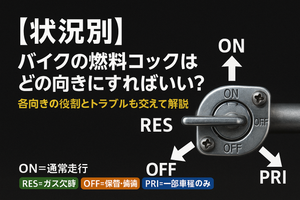
When removing the fuel tank, first turn the cock to the OFF position to cut off the gasoline flow, then disconnect the fuel hose.
Cleaning
For dry or viscous elements, either replace them with new ones or, if the dirt is light, clean them by blowing off debris with an air blower.
If it's a wet-type sponge element, cleaning is possible, so wash it using a specialized cleaner.
Installation
Once the element is replaced with a new one or cleaned, install it back into the air cleaner box as it was originally.
After installing the element into the air cleaner box, reattach the fuel tank and seat.
When installing the fuel tank, securely connect the fuel hose, then fix the fuel tank in place. Don't forget to turn the fuel cock to ON after securing it.
Motorcycle Air Cleaner Replacement FAQ

Source: https://pixabay.com/ja/photos/A4-4537791/
This section compiles frequently asked questions and answers regarding motorcycle air cleaners.
Please refer to it if you are considering replacing your air cleaner or want to know more about maintenance.
What happens if a motorcycle air cleaner gets clogged?
If a motorcycle's air cleaner gets clogged, the engine will malfunction, and fuel efficiency will worsen.
Carbureted motorcycles tend to show engine problems more clearly, but fuel-injected motorcycles adjust fuel automatically, making it harder to notice engine problems.
Since "fuel efficiency might have worsened without me noticing," it's important to regularly inspect and replace your air cleaner.
Where is the motorcycle air cleaner box?
On most motorcycles, the air cleaner box is located under the fuel tank or seat.
While some types allow the box to be removed by taking off the seat cowl, its usual position is generally beneath the fuel tank.
What's the difference between a power filter and an air cleaner?
A power filter generally refers to a brand name product, but sometimes non-genuine air cleaners are called power filters, distinguishing them from genuine air cleaners.
Some power filters claim to improve intake efficiency, but increasing intake efficiency can sometimes be counterproductive, such as making it harder for blow-by gas to be discharged from the engine, thereby hindering the engine's combustion efficiency.
Unless custom modifications prevent the air cleaner box from being installed, it is safer to replace it with a genuine air cleaner element (filter).
What are the benefits of replacing a motorcycle's air cleaner?
Replacing a motorcycle's air cleaner can improve engine starting ability and fuel efficiency.
As you ride, dirt accumulates in the air cleaner, reducing intake efficiency and thus decreasing engine performance. Replacing it restores the engine to its original performance, which is the benefit of air cleaner replacement.
Summary

Source: https://pixabay.com/ja/photos/A4-932690/
We've discussed the symptoms that can occur if you continue to ride with a dirty motorcycle air cleaner, and the benefits of replacing it.
While air cleaners require regular maintenance and replacement, continuing to ride without replacement can lead to unnoticed problems such as worsening fuel economy or difficulty starting the engine.
Regularly replacing it with a new one and maintaining your engine's condition will allow you to enjoy a more comfortable motorcycle life.
Recommended Products
Latest Articles




Popular product


×
![]()