



Mar 30, 2026
[New Standards] Motorcycle Engine Displacement Categories: Maintenance Costs, Traffic Rules, and Licenses for Each Displacement
How to replace motorcycle turn signals! From precautions to recommended turn signals, a complete guide
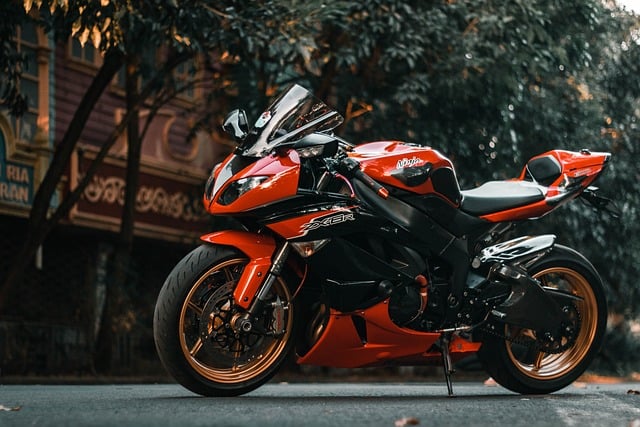
Why change motorcycle turn signals?

Source: https://pixabay.com/ja/photos/82%A4-6241835/
Changing turn signals is a popular and easy motorcycle customization, but what are the reasons for doing so?
There are several reasons to replace motorcycle turn signals, including:
- To change the appearance
- To replace with LEDs
- To replace with aftermarket parts when they break or are damaged
Reason 1: To change the appearance
Changing your motorcycle's turn signals can alter its overall appearance.
Although turn signals may seem to occupy a small area on the motorcycle's body, they are highly visible to those around you when turning left or right or when using the hazard lights.
Therefore, even a small change in turn signals can change the look of your motorcycle and has a dress-up effect.
Reason 2: To replace with LEDs
Replacing conventional halogen turn signal bulbs with LEDs reduces power consumption and increases light output.
LEDs also have a longer lifespan than halogens (filaments don't break like halogens), which reduces the frequency of replacements due to burnout. Their characteristics include lower power consumption, increased light output, and a long lifespan.
Reason 3: To replace with aftermarket parts when they break or are damaged
Another reason is to replace turn signals with aftermarket or LED ones when they are damaged, such as from a motorcycle fall, or when their base breaks due to age.
Many people choose to replace damaged turn signals with those of a different design or LED ones, reasoning that since they are buying new ones anyway, they might as well upgrade.
Ensure motorcycle turn signal replacements meet safety standards

Source: https://pixabay.com/ja/photos/84-4925687/
When replacing parts on a motorcycle, not just turn signals, they must comply with safety standards or fall within the specified range.
So, what exactly are safety standards?
What are safety standards?
Safety standards are criteria established by the Road Traffic Act for safety and pollution control, and violations are subject to enforcement.
Standards are stipulated for all parts of a motorcycle, including turn signals, headlights, tires, and mufflers.
Turn signal safety standards
Safety regulations for motorcycle turn signals stipulate installation position, light color when illuminated, blinking status, and that there should be no dirt or damage.
The installation position must be 2.3m or less from the ground and symmetrical. For the front, the innermost edges of the left and right turn signals must be at least 240mm apart. For the rear, the centers of the light-emitting surfaces must be at least 150mm apart horizontally.
Additionally, turn signals must be visible from any direction within a 20° inner and 80° outer angle.
| Installation height | Within 2.3m of the ground and symmetrical |
| Front | The innermost part of the turn signals must be at least 240mm apart horizontally |
| Rear | The center of the light-emitting surfaces must be at least 150mm apart horizontally |
| Visibility direction | Must be visible from within an inner 20° and outer 80° range |
Flashing must occur 60-120 times per minute at regular intervals. A change in the flashing cycle is a violation.
What happens if safety standards are violated?
If safety standards are violated, motorcycles over 250cc will not pass inspection due to poor maintenance, and will be subject to a violation if caught by the police.
Violation of safety standards incurs 1 penalty point and a fine of 5,000 yen for motorcycles under 50cc, and 1 penalty point and a fine of 6,000 yen for motorcycles 50cc and above.
Furthermore, if it is determined that modifications are excessive and violate the Road Traffic Act, you may be subject to stricter penalties for "illegal modification."
Reference: National Police Agency "Traffic Violation Point List"
https://www.keishicho.metro.tokyo.lg.jp/menkyo/torishimari/gyosei/seido/tensu.html
More severe penalties for illegal modifications
If modifications are made outside the scope permitted by the Road Traffic Act, it is considered an illegal modification, punishable by imprisonment for up to 6 months or a fine of up to 300,000 yen.
If caught for illegal modification, an "Illegal Modification Vehicle Sticker" will be affixed and a maintenance order will be issued. Within 15 days, the vehicle must be maintained within the legally stipulated range and inspected at the Land Transport Bureau.
If the maintenance order is not followed (i.e., the vehicle is not maintained and inspected at the Land Transport Bureau), the license plate will be confiscated and the vehicle will be suspended from use for 6 months.
What you need to replace motorcycle turn signals

Source: https://pixabay.com/ja/photos/BC-608318/
Replacing motorcycle turn signals is a relatively easy part replacement, but what tools are needed for the job?
In fact, for a simple replacement, you'll need very few tools besides the replacement turn signals themselves.
Tools required for turn signal replacement
The tools required for replacing motorcycle turn signals are as follows:
- Phillips screwdriver (+)
- 10-12mm wrench
Depending on the model, there may not be enough space to use an adjustable wrench, so it's better to have a set of open-end wrenches.
Also, when replacing halogen with LED, the reduced power consumption can cause hyper flashing (rapid blinking), which violates safety standards. Therefore, a relay is needed to prevent hyper flashing.
Steps to replace motorcycle turn signals

Source: https://pixabay.com/ja/photos/AF-422698/
This section explains the steps for replacing motorcycle turn signals for those who are considering doing it themselves.
Replacing turn signals is a relatively easy part replacement with few tools required, but be careful not to pull on the wiring forcibly, as this can cause damage such as disconnections.
Step 1-1: Remove the genuine turn signal
First, remove the original turn signals from the motorcycle. Disconnect the wiring at the bullet connector. If it's a naked bike, the wiring is housed inside the headlight, so first remove the headlight cover.
Genuine turn signals are usually attached to a stay or, in the case of a faired bike, to the fairing, and are often secured by just one or two bolts. Once these bolts are removed, the turn signal unit can be detached.
When removing the front turn signals, there is usually enough space to turn the bolts. However, for rear turn signals, the bolts are often located in a cramped space, so a double open-end wrench that can easily fit on the bolts is necessary.
Step 1-2: How to handle bullet connectors
Bullet connectors are detachable connectors consisting of male and female terminals, allowing for easy connection and disconnection of wiring.
To disconnect bullet connectors on turn signals, hold both the male and female terminals and pull them apart while gently twisting. If they are stuck and difficult to remove, try gripping one terminal with radio pliers and pulling it straight out.
Whether you're separating them by hand or using radio pliers, always grasp the base of the terminal. Pulling on the wires can cause disconnections.
Step 2: Install the turn signal stay
Install the turn signal stay, ideally adjusting the turn signal's direction and angle to match the genuine part before mounting the stay.
Turn signals have detailed regulations regarding height, angle, and visible range. Failure to comply with these regulations can result in a violation of safety standards and enforcement.
Also, if the turn signal's illumination is not visible to surrounding traffic, it could lead to an accident. Therefore, pay careful attention to the installation of the stay that determines the turn signal's placement.
Step 3: Install the new turn signal
Once the turn signal stay is installed, attach the new turn signal.
Common problems when replacing turn signals include improperly connected bullet connectors, which can lead to disconnections due to riding vibrations, or incorrect wiring of the left and right turn signals. Be careful during installation.
When replacing halogen with LED, relay replacement is also necessary. If the relay is not replaced and used as is, hyper flashing (rapid blinking) will occur, which violates safety standards.
Step 4: Reattach the headlight cover
Once the turn signals are installed, if it's a naked bike, reattach the headlight cover.
Arrange the wiring so it's split to the left and right, and neatly bundle it with electrical tape, ensuring no excessive force is applied to the wiring.
It's also a good idea to wrap electrical tape around the bullet connectors for waterproofing and protection (some turn signals come with protective rubber).
Step 5: Check the lights
After installing the headlight cover (for naked bikes), check if the turn signals light up properly.
Also, stand about 5 meters away from the motorcycle and check if the left and right turn signals are balanced and properly positioned.
LED is the trend in motorcycle turn signal customization

Source: https://pixabay.com/ja/photos/AF-3147278/
LED turn signals are a growing trend for motorcycles, especially in new models released by manufacturers.
LED turn signals offer various advantages over traditional halogen lamps, and the shift towards LED will likely continue.
Longer lifespan and lower power consumption than halogen
LEDs have a longer lifespan, lower power consumption, higher light output, and faster response time than halogens.
LED lamps are said to have a lifespan of approximately 30,000 hours, while halogen lamps are said to last around 600 hours, a difference of 50 times.
Furthermore, lower power consumption reduces the burden on the battery, while the light output (lumens: lm) is higher than halogen, and the turn-on response is also faster than halogen.
LED turn signals prevent hyper flashing with relay replacement

Source: https://pixabay.com/ja/photos/88-2197863/
When replacing halogen turn signals with LEDs, if only the bulb is replaced, it can result in a "hyper flash" state, where the turn signal blinks on and off rapidly.
Originally, hyper flashing is a function that alerts the rider to a burnt-out bulb by causing the remaining turn signal to flash rapidly when one turn signal bulb fails.
Hyper flashing will not pass vehicle inspection
When replacing halogen with LED, power consumption decreases, causing the motorcycle to mistakenly recognize a burnt-out bulb and enter a hyper flash state.
Safety standards state that turn signals must flash regularly between 60 and 120 times per minute. Hyper flashing significantly exceeds this rate, making it a violation of safety standards and thus failing vehicle inspection.
When replacing halogen with LED, a relay replacement is necessary to prevent hyper flashing.
What is a relay replacement?
A relay (turn signal relay) is a component that makes turn signals blink at regular intervals.
When replacing halogen with LED, hyper flashing will occur, so you should replace the turn signal relay as well.
Some LED turn signal bulbs have built-in resistors to prevent hyper flashing, in which case relay replacement is not necessary.
5 Recommended Motorcycle Turn Signal Customization Products

Source: https://pixabay.com/ja/photos/BC-1866842/
Here are 5 recommended products for motorcycle turn signal replacement.
All of the products introduced are LED. Please refer to this if you are considering replacing your turn signals.
Recommendation 1: KIJIMA LED Turn Signal & Taillight Nano Combi Lamp

Source: https://bikeman.jp/products/kj-219-5180
KIJIMA's "LED Turn Signal & Taillight Nano Combi Lamp" is a set that includes LED turn signals and a taillight, making it recommended for those who want to convert other lights to LED along with their turn signals.
It features excellent visibility despite its compact size, and it has acquired the "E-mark" (granted to products conforming to safety standards), so it is compatible with vehicle inspections.
- Body size: 9.8 × 9.8 × 14.2 (mm)
- Selling price (tax included): 17,697 yen
Recommendation 2: Oberon LED 2WAY Turn Signal Black

Source: https://bikeman.jp/products/od-ind-0008-k
The oberon "LED 2WAY Turn Signal Black" is a uniquely shaped turn signal, recommended for those who want to install high-quality LED lights.
The aluminum-machined body has a luxurious feel, and it uses high-brightness LEDs, providing excellent visibility despite its compact size.
- Size: 68 x 28mm (body part)
- Selling price (tax included): 16,924 yen
Recommendation 3: KIJIMA Turn Signal Lamp Cowl Turn Signal #630 Cowl Type

Source: https://www.bikeman.jp/
The KIJIMA "Turn Signal Lamp Cowl Turn Signal #630 Cowl Type" (square) is a universal LED turn signal for faired motorcycles.
This turn signal was already popular, but it has been renewed from the traditional round shape to a square one, and you can choose from three colors: clear, amber, and smoke, to match your motorcycle.
- Body size: 68 x 28 x 20 (mm)
- Selling price (tax included): 2,970 yen
Recommendation 4: MFC PRO Universal Motorcycle High Brightness LED Waterproof

Source: https://amzn.to/3QuUzIy
MFC PRO "Universal Motorcycle High Brightness LED Waterproof" is recommended for those looking for slim, elongated LED turn signals.
It's versatile enough to suit various motorcycle genres, from naked bikes to faired models and scooters, and its excellent waterproofing ensures peace of mind even on rainy days.
- Size (mm): 158 x 108 x 54
- Selling price (tax included): 1,799 yen
Recommendation 5: MERSHEART European Turn Signal Bullet Type

Source: https://amzn.to/3FNQNoR
For those looking for an affordable European bullet-type LED turn signal, MERSHEART's "European Turn Signal Bullet Type" is recommended.
This compact turn signal with a stylish design suits a wide range of motorcycles, from scooters to faired touring bikes.
- Size (mm): Approximately 35mm diameter × 58mm depth × 75mm height
- Selling price (tax included): 1,980 yen
Average cost when requesting a turn signal replacement at a shop

Source: https://pixabay.com/ja/photos/BC-5875913/
Replacing turn signals is a relatively easy motorcycle customization, but how much does it cost to have a shop do it?
We will provide an estimate of the replacement costs for purchasing and replacing turn signals at a motorcycle shop, and for bringing your own turn signals to a shop for replacement.
When requesting from a motorcycle shop
When you purchase turn signals at a motorcycle shop and request replacement, the average cost is around 2,000 to 3,000 yen for the front only, and 4,000 to 7,000 yen for replacing all four turn signals (front and rear).
If replacing halogen with LED, a relay replacement is needed, which adds about 2,000 yen to the turn signal replacement cost.
When requesting with owner-provided turn signals
If you bring your own turn signals and relay to a shop for installation, the labor cost is around 3,000 yen for the front only, and 5,000 to 8,000 yen for replacing both front and rear.
Relay replacement starts from 3,000 yen, and some shops may charge 1.5 to 2 times more for labor compared to when you purchase turn signals at their shop.
Before making a request, inquire about the labor costs for both bringing your own parts and purchasing them at the shop. If the difference is significant, buying from the shop might save you more overall.
FAQ about motorcycle turn signal replacement

Source: https://pixabay.com/ja/photos/AF-552787/
This section compiles "frequently asked questions" and their "answers" regarding motorcycle turn signal replacement.
If you are considering replacing your turn signals, please refer to this information.
I don't know how to remove bullet connectors...
To remove bullet connectors, hold both terminals and pull them apart while gently twisting.
They are often stiff and difficult to remove. In such cases, hold one terminal by hand and grip the other with radio pliers, then pull straight to remove it more easily.
As a precaution, pulling on the wires can lead to disconnections, so always hold the terminal when pulling it out.
Will sequential turn signals pass vehicle inspection?
Sequential turn signals are only permitted if they are horizontal and illuminate from the inside of the vehicle outwards.
Vertical or diagonal turn signals will not pass vehicle inspection. Therefore, if you are considering installing sequential turn signals, you need to check if they can be installed horizontally.
How do I remove a motorcycle turn signal bulb?
To remove a turn signal bulb, first unscrew the screws holding the turn signal lens (cover) and remove the lens.
The turn signal bulb is attached to a socket on the back of the lens. Turn the socket counter-clockwise and pull it out. Then, push the base of the bulb in the socket and twist it counter-clockwise to remove it.
When installing a bulb, be careful not to get fingerprints on the bulb's surface, as this can cause it to heat up and burn out more easily. So, when replacing with a new bulb, avoid touching it with your bare hands.
Does the turn signal wiring have 1, 2, or 3 wires?
If the new turn signal only has one wire, connect it to the positive wire of the turn signal and connect the turn signal to a metal part.
If there are two wires, connect them to the positive and negative wires respectively, just like the genuine ones. If there are three wires, it's a type where the turn signal and position light are separate.
In the case of three wires, one positive wire each for the turn signal and position light, totaling two, and the remaining one is negative. Make sure to connect the positive and negative wires correctly to the motorcycle's wiring for it to work.
Summary

Source: https://pixabay.com/ja/photos/A1-8191149/
We've explained the reasons for replacing motorcycle turn signals, fundamental knowledge about current mainstream LED turn signals, and the procedures and precautions for replacement.
When replacing traditional halogen turn signals with LED turn signals, the reduced power consumption will cause hyper flashing, so a relay replacement is also necessary.
A hyper-flashing state is a violation of safety standards and will fail vehicle inspection. Riding on public roads in this condition will also result in a violation ticket, so be careful when replacing with LED turn signals.
Recommended Products
Latest Articles





Popular product


×
![]()