



Sep 13, 2026
絶版・旧車パーツがプレミア価格になる理由と相場の調べ方を徹底解説
[Causes and Solutions] Heavy Motorcycle Clutch! From How to Lighten it to Easy Maintenance
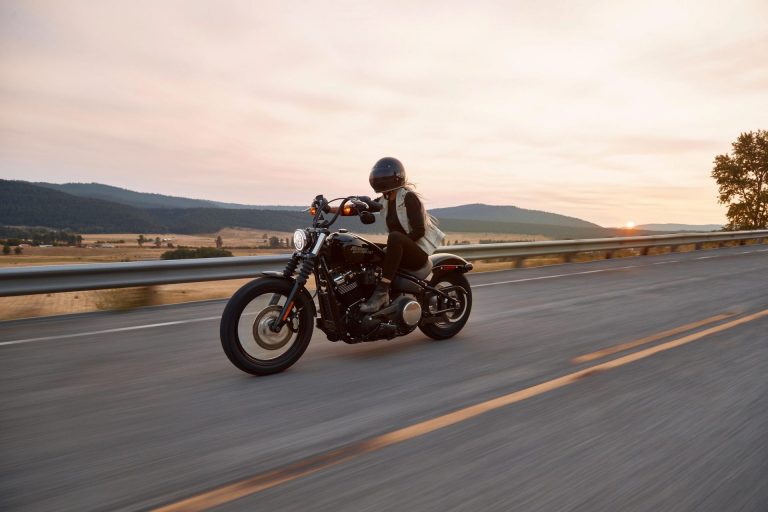
What causes a motorcycle clutch lever to feel heavy?

Source: https://unsplash.com/ja/A4-CRmcBeINxtg
The motorcycle clutch is an important part of operating gears, but sometimes the clutch can feel heavy while riding.
The main reasons why a clutch feels heavy are as follows:
- Weight specific to the motorcycle model
- Lack of lubrication or accumulation of dirt
- Rust or deterioration of the clutch cable
- Deterioration of the fluid
- Problem with clutch cable routing
- Adjustment of clutch lever position and free play
Reason 1: Weight specific to the motorcycle model
One reason a motorcycle clutch feels heavy is the clutch's inherent weight, which varies depending on the motorcycle model and manufacturer.
The heaviness of a Harley-Davidson clutch, in particular, is well-known. Due to the large engine displacement and power, the clutch spring is designed to be very strong to handle the power.
Some motorcycles, such as the CB from a Japanese manufacturer or Harley-Davidson from an import, naturally have a heavy clutch.
Reason 2: Lack of lubrication or accumulation of dirt
If the clutch runs out of oil, lubrication will not work properly, causing the clutch to feel heavy.
Additionally, if dirt such as dust or mud, or rust, accumulates on the clutch cable, it can hinder the clutch's operation and make it difficult to move smoothly, causing the clutch to feel heavy.
Dirt not only prevents the clutch cable from operating smoothly, but if left unattended, it can also make clutch operation itself impossible.
Reason 3: Rust or deterioration of the clutch cable
Rust can also impede the movement of the clutch cable, leading to a heavy clutch.
In the case of rust, the wire has oxidized and rust has formed, indicating deterioration such as reduced wire durability, which is dangerous as it may snap.
Especially when going on a long tour away from home, a snapped clutch cable can be disastrous, so if you feel the clutch is heavy, make sure to perform proper maintenance before you leave.
Reason 4: Deterioration of the fluid
When clutch fluid deteriorates, rust can form within the fluid, or air can easily become trapped, causing the clutch to feel heavy.
Additionally, because the fluid lubricates the clutch for precise operation, if the fluid deteriorates, symptoms such as the clutch not disengaging even when it's supposed to can occur.
If the clutch isn't disengaging when you intend for it to, you won't be able to shift gears correctly, leading to jerky riding and potentially affecting rideability and comfort.
目安となるフルード交換時期
The recommended replacement interval for motorcycle clutch fluid is 50,000 km or 5 years after the vehicle is new or after a previous replacement.
Because it's not replaced as frequently as engine oil, it's easy to forget about replacement and inspection, but deteriorated fluid can lead to poor clutch engagement or rust formation.
Also, when riding a motorcycle that hasn't been ridden for more than a year, be sure to replace the clutch fluid along with the engine oil before riding.
Reason 5: Problem with clutch cable routing
If there is a problem with the routing of the clutch cable, the clutch may feel heavy.
If the cable is taut due to its routing, the clutch will have no free play and will feel heavy. Conversely, if it's too long, it may interfere with surrounding parts and also feel heavy.
When changing handlebars, the length of the clutch cable may no longer be suitable, so check if the clutch cable is too long or too short.
Reason 6: Problem with clutch lever position or amount of free play
The clutch may feel heavy depending on the position of the clutch lever.
Since the clutch lever is designed to operate on the principle of leverage, if the clutch lever is in an awkward position, it may be difficult to apply force, which can make it feel heavy.
Also, if the free play of the clutch cable is extremely small, more force will be required when operating the clutch, so an inappropriate amount of free play is also a cause of a heavy clutch.
Clutch lever position adjustment
For motorcycles with a dial-type adjuster at the base of the clutch lever, the distance of the clutch lever can be adjusted.
Try squeezing the clutch lever while turning the dial one by one to find the optimal position.
Once the clutch lever is adjusted, also adjust the brake lever to balance both sides.
対策とメンテナンス

Source: https://unsplash.com/ja/BA-MS0q8GqjVrY
If you think "my clutch lever feels heavy" or you bought a used motorcycle and "the clutch feels heavy," try the following countermeasures and maintenance.
- Perform maintenance such as cleaning
- Adjust the free play with the adjuster
- Review the clutch cable routing
- Replace the clutch cable
- Review how you grip the clutch lever
We will explain each in detail.
Countermeasure 1: Perform maintenance such as cleaning
If the clutch feels heavy, try performing maintenance around the clutch, such as on the clutch cable and clutch lever.
If dirt such as dust or rust adheres to the cable, the dirt can hinder clutch operation or the rust can seize, making the clutch heavy.
Clean the clutch lever and the area around the cable and apply grease. Perform regular maintenance to prevent it from becoming heavy again or malfunctioning.
Countermeasure 2: Adjust clutch free play
If the clutch free play is not set correctly, the clutch may feel heavy, so check if the amount of free play is appropriate (approximately 1 cm to 2 cm).
Motorcycle clutches come in two types: cable-operated and hydraulic. Cable-operated clutches require adjustment with an adjuster, while hydraulic clutches are essentially automatically adjusted by oil and therefore do not require adjustment.
If you have too much free play on a cable-operated clutch, the clutch operation will feel softer, but too much free play can prevent the clutch from disengaging, so caution is needed.
How to adjust clutch free play
Adjusting the clutch's free play changes the grip width of the clutch and the point at which the clutch disengages when squeezed.
Clutch free play adjustment is easy: loosen the disc-shaped screw (lock screw) at the base of the clutch lever, then adjust with the screw next to the disc-shaped screw.
Once adjusted to the appropriate amount of free play, tighten and secure the disc-shaped screw to complete the free play adjustment.
Countermeasure 3: Review the clutch cable routing
If the clutch cable routing is too short or too long, it can affect clutch operation, so review whether the length and routing are optimal.
If it's too short, there will be no free play in the clutch, making it heavy. If the clutch cable is too long, it may interfere with surrounding parts and also make it heavy.
If you've replaced the handlebars, the length of the handlebars will have changed, and the cable routing may also have changed from the stock handlebars, so it's necessary to check if the clutch cable length is appropriate.
Countermeasure 4: Replace the clutch cable
If the clutch cable is deteriorated or rusty, replace it.
Also, if you have customized your motorcycle by replacing the handlebars, the clutch cable length may no longer be appropriate, in which case it is necessary to replace the clutch cable with a suitable one.
Clutch cables also stretch, so if there is too much free play even after adjusting with an adjuster, replacement will be necessary.
Countermeasure 5: Review how you grip the clutch lever
Since the clutch lever operates on the principle of leverage, reviewing the position and way you grip the clutch lever can make its operation lighter.
Additionally, changing the angle of the clutch lever can also affect how easy it is to grip, so it's recommended to adjust it to an angle that suits you.
Loosening the holder bolt allows you to change the direction of the clutch lever, so sit on your motorcycle, find a comfortable gripping position, and fix it there.
Countermeasure 6: Adjust the clutch lever distance
On motorcycles with a circular dial at the base of the clutch lever, you can adjust the clutch lever's position (distance) by turning the dial (no tools required).
Adjusting the dial to a comfortable gripping position for the clutch lever will make clutch operation easier and reduce fatigue during long rides.
After adjusting the clutch lever distance, adjust the brake lever in the same way to balance both sides.
How to lighten the clutch with motorcycle customization

Source: https://unsplash.com/ja/A4-7waHOTcvcT4
Customizing the clutch area of your motorcycle can also make clutch operation lighter.
The main customizations that can be made around the clutch are as follows:
- Install a VP clutch
- Install a light clutch
- Replace the clutch lever
- Replace clutch peripheral parts
Customization 1: Install a VP clutch
A popular customization for lightening the clutch is to install a VP clutch.
VP stands for "Variable Pressure," and it involves replacing the retainer that presses the clutch plates, softening the spring, and making clutch operation lighter.
It's a classic customization for motorcycles with inherently heavy clutches, such as Harley-Davidsons. Weakening the spring force makes clutch operation smoother, and shifting gears becomes easier.
<h3>Customization 2: Install a light clutch</h3>
Similar to VP clutches, a classic customization that lightens clutch operation is the light clutch kit.
Kits can be purchased relatively cheaply, starting from around 10,000 yen, and reduce the force required to pull the clutch by about 40% compared to stock. This is particularly beneficial for those with less grip strength or smaller hands.
However, depending on the light clutch kit, neutral may become slightly harder to engage, or clutch disengagement may worsen.
Customization 3: Replace the clutch lever
Clutch levers that reduce gripping force are also available for purchase, and replacing your lever with one of these can make clutch operation smoother and lighter.
They are sold under names like "billet levers" or "light clutch levers," and some models allow for easy adjustment of the clutch lever's angle and position, enabling customization to your body type and riding position.
Some clutch levers also change the appearance, with engraved brands and refined designs, so choosing one that matches the atmosphere of your bike is also a good idea.
Customization 4: Replacement of clutch peripheral parts
There is also a method of lightening the clutch by replacing peripheral clutch parts.
Replacing the clutch spring with one that has a lower spring rate will reduce the repulsive force when engaging the clutch, making the clutch lighter. However, be careful not to make it too low, as this can cause clutch slip.
Also, if the push rod is bent or severely worn, the clutch engagement may be poor, so replacing it with a new one may improve the heaviness.
Summary

Source: https://unsplash.com/ja/B7-zGzXsJUBQfs
We've explained the reasons why a motorcycle clutch feels heavy, along with its causes and solutions.
While a heavy clutch can sometimes be an inherent characteristic of a particular motorcycle model, it is often due to deterioration or wear of clutch-related parts caused by insufficient maintenance.
Additionally, many custom clutch parts are available that can lighten clutch operation, so if maintenance doesn't resolve the heaviness, consider custom options to lighten your clutch.
Recommended Products
Latest Articles
-

-
 Sep 13, 2026夏のバイクの服装は?暑さをしのぎながら、安全性も確保できる服まとめ
 -
 Sep 13, 2026【ジャンク品売れる?】バイクパーツや部品は壊れている・サビている・欠品ありでも売却可能か
 -
 Sep 13, 2026カワサキの純正部品が買えなくなるって本当?理由と今後の代替手段、まだ買えるショップを解説
 -
 Sep 13, 2026バイクパーツ(部品)買取の相場は?業者比較や売却価格が左右される5つの要素
 -

-

-
-
-


Popular product


×
![]()