



Mar 30, 2026
[New Standards] Motorcycle Engine Displacement Categories: Maintenance Costs, Traffic Rules, and Licenses for Each Displacement
Easy ways to remove rust from your motorcycle? We'll also explain the causes of rust and how to prevent it!
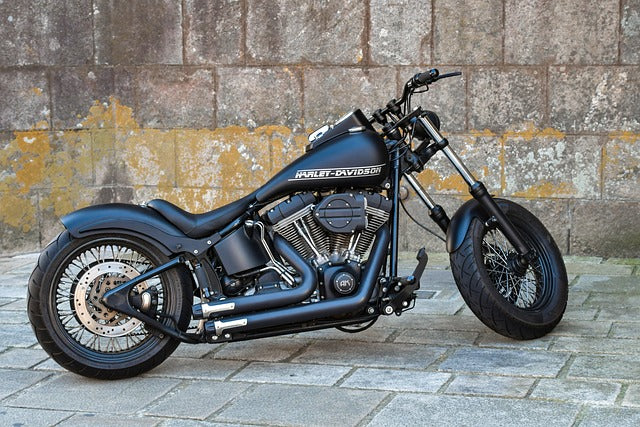
Main Causes of Rust on Motorcycles

Source: https://pixabay.com/ja/photos/A4-3777389/
Due to the nature of metal, rust is an inseparable issue. Motorcycles, being composed of numerous metal parts, are prone to rust if maintenance like washing is neglected.
The main reasons for rust on motorcycles include the use of metal, leaving the bike wet after rain, and the influence of Japan's humid climate, all of which relate to maintenance.
Cause 1: Use of Metal
Rust occurs on motorcycles because metal is used throughout. Metal reacts chemically with moisture and oxygen, making it highly susceptible to rust.
Furthermore, sea breezes contain trace amounts of salt. Salt attracts moisture and combines with metals to cause chemical reactions, accelerating rust formation.
If you ride near the sea for extended periods or live nearby, rust prevention measures such as regular washing are necessary.
Cause 2: Left Wet After Rain
If a motorcycle is left wet after rain, it becomes more prone to rusting.
Rust forms through oxidation, and metal, especially iron surfaces, oxidizes when exposed to water and oxygen. Therefore, leaving it wet increases the likelihood of rust.
Rust is particularly common during the rainy season, which has many rainy days and high humidity. It is crucial not to leave the motorcycle wet; wipe off moisture with a towel after riding.
Cause 3: Influence of Japan's Climate
Japan's relatively humid climate makes motorcycles prone to rust.
Humidity increases with the amount of water vapor in the air, and since water vapor consists of water and oxygen, high humidity promotes rust formation.
The rainy season, in particular, is the period with the most rust in a year due to high humidity, dampness, and frequent rain.
Rust on Plating
Plated parts are generally considered rust-resistant due to their high corrosion resistance, but rust can still occur.
Plating surfaces have tiny pores, through which moisture and oxygen can penetrate, causing rust to form from the inside (the base material).
The rust that forms on the base material eventually spreads to the plating, becoming visible on the surface.
How to Remove Rust from Motorcycles

Source: https://pixabay.com/ja/photos/B4-3757288/
Rust is prone to occur during the rainy season or if the bike is left wet. But what should you do if rust appears on your motorcycle?
There are three main methods for removing rust from a motorcycle:
- Removing with abrasive agents
- Removing with chemical agents
- Using a metal scourer
Method 1: Removing with Abrasive Agents
Rust on a motorcycle can be scraped off using an abrasive agent.
Abrasive agents are typically liquid or cream-based. Apply an appropriate amount to a cloth or an old towel and rub to remove the rust.
The smaller the rust, the smaller the area that needs to be abraded, and the less impact there will be on the material. However, when polishing large areas of rust, there is a risk of also abrading the material, so proceed slowly and carefully.
Method 2: Removing with Chemical Agents
For rust that is difficult to remove with abrasive agents, chemical agents can sometimes be effective, as the chemicals react with and remove the rust.
Even stubborn rust can often be removed relatively easily without much effort, as the chemicals dissolve or loosen the rust.
Unlike abrasive agents, chemical agents react only with rust, so they do not abrade or damage the base material (metal).
Method 3: Using a Metal Scourer
For relatively minor rust, another method is to use a metal scourer to rub and gradually scrape off the rust.
However, this can easily cause fine scratches on the metal material, and continuous scrubbing with force can create fine scratches that may lead to new rust formation, so caution is advised.
As with other rust removal methods, after removing rust with a metal scourer, don't forget to apply a rust preventative to prevent new rust from forming.
How to Choose a Motorcycle Rust Remover

Source: https://pixabay.com/ja/photos/B9-330815/
There are various types of motorcycle rust removers, and it can be confusing to choose. However, by keeping the following selection criteria in mind, you should find the optimal rust remover.
- Choose by rust remover type
- Choose by rust and metal type
- Choose one with rust prevention effects
Choose by Rust Remover Type
There are mainly five types of rust removers:
- Cream type
- Liquid type
- Abrasive type
- Spray type
- Eraser type
The characteristics, advantages, and disadvantages of each rust remover type are described below. Understanding these will help you choose the best one for your motorcycle's rust situation.
Type 1: Cream Type
Cream-type rust removers work by applying the cream to the rust, which then chemically breaks down and removes it.
After applying the cream, leave it for an appropriate time depending on the extent of the rust, then rinse it off. The degree of effectiveness can be adjusted by varying the waiting time.
The advantage is that it has almost no effect on the metal material and can easily remove advanced rust. The disadvantage is that it can be difficult to use in narrow or confined spaces.
Type 2: Liquid Type
Liquid types penetrate deeper than cream types, making them suitable for use in narrow spaces.
Applying the liquid directly to rust causes a chemical reaction that breaks down the rust, making it easier to remove even stubborn rust.
The advantage is that it can be used in narrow spaces and penetrates deeply. The disadvantage is that the liquid can drip easily, and thorough rinsing is required if it penetrates deeply, making it a bit more troublesome to use.
Type 3: Abrasive Type
This type of rust remover uses abrasive action to polish off rust and comes in solid (like wax) or liquid forms.
You apply the agent to the rust and then polish it off. Since the agent does not penetrate deep into the rust, it is more suitable for relatively light rust.
The advantage is that it is inexpensive and readily available, and it is time-efficient as you can polish immediately after applying the agent. The disadvantage is that significant effort is required to remove rust since the agent does not penetrate.
Type 4: Spray Type
The spray type is recommended for those who want to remove rust easily. Simply spray the agent onto the rust, leave it for about 5 to 10 minutes, then rinse with water, and the rust will come off.
The advantages are its ease of use, as it can be sprayed even into hard-to-reach areas, and the convenience of simply rinsing with water after letting it sit, requiring minimal effort.
A disadvantage is that it may be slightly less effective at removing rust compared to liquid types, but repeated applications can often remove the rust.
Type 5: Eraser Type
For rust spots the size of a grain of rice or smaller, an eraser-type rust remover might be effective.
While abrasive types can easily damage surrounding areas even for small rust spots, eraser types are convenient because they are less likely to damage the surroundings and are easy to use.
The advantages include less damage to surrounding areas, while the disadvantage is that it is not suitable for larger rust spots.
Choose by Rust and Metal Type
In addition to choosing a rust remover by type, you can also select one based on the type of rust and the metal material.
There are different types of rust, and the type of rust that forms varies depending on the material. It is necessary to confirm that the rust remover is suitable for the specific type of rust.
Rust includes red rust and black rust that occur on iron, white rust on aluminum, and green rust on brass. Ensure that the rust remover matches the type of rust you intend to remove.
Choose one with Rust Prevention Effects
Even if you remove rust, it can reappear, so choosing a product with both rust removal and rust prevention effects is recommended.
Especially when removing rust with abrasive-type removers or metal scourers, fine scratches can easily form on the surrounding material, and rust can then develop from these scratches.
Either choose a rust remover that also has rust prevention properties, or use a separate rust preventative to ensure that rust does not reappear.
Recommended Motorcycle Rust Removers

Source: https://pixabay.com/ja/photos/8E-7249769/
Here are 6 recommended rust removers for motorcycles. Please choose one based on the size, location, and material of the rust.
Recommendation 1: KURE Rust Remover

Source: https://bikeman.jp/products/kre-4972444010425
The rust remover from KURE (Kureha Chemical Industry), famous for its lubricant CRC KURE 5-56, is a gel-type rust remover recommended for those who want to easily remove rust.
It contains a special penetrating agent that quickly seeps into rust, powerfully breaking down even stubborn rust.
Being a thick gel (liquid) type, it resists dripping even on vertical surfaces, reacts quickly with rust, and penetrates deep, making it a highly convenient rust remover.
・Product Name: KURE Rust Remover
・Price (tax included): 998 yen
・Applicable Metals: Iron
・Rust Remover Type: Gel (liquid)
・Rust Prevention Effect: None
Recommendation 2: ICHINEN CHEMICALS SABESU SP

Source: https://bikeman.jp/products/ichi-000694
SABESU SP is a rust remover that you spray, leave for a while depending on the size and depth of the rust, and then wipe off with a cloth.
If left for more than 10 minutes, the product can penetrate beyond the rust and into the base material. Therefore, stay nearby during use and wipe it off promptly, observing the progress as you work.
For severe rust, it is more effective to first remove the majority of the rust with a metal brush or similar tool before using SABESU SP.
・Product Name: ICHINEN CHEMICALS SABESU SP
・Price (tax included): 2,099 yen
・Applicable Metals: Iron
・Rust Remover Type: Spray type
・Rust Prevention Effect: None
Recommendation 3: HANASAKA Rust Remover for Iron/Stainless Steel

Source: https://bikeman.jp/products/hnag-hsg-rr-300
HANASAKA (Hanaska G: Eigiken) Last Remover is a brush-on liquid rust remover.
If the rust has formed a scab-like layer, first remove as much of it as possible, then apply the Last Remover with a brush, let it sit briefly (within 10 minutes), and then wipe it off with a cloth.
When using this product, take care to prevent the liquid from getting on areas other than the rust. Masking or using a cloth for protection is recommended before starting work.
・Product Name: HANASAKA Last Remover
・Price (tax included): 2,682 yen
・Applicable Metals: Iron, Stainless Steel
・Rust Remover Type: Liquid (brush-on)
・Rust Prevention Effect: Yes
Recommendation 4: Verity Rust Remover Sister Eco-Friendly Motorcycle Tank Rust Remover

Source: https://bikeman.jp/products/vrt-so
Verity "Rust Remover Sister" is an eco-friendly rust remover specifically designed for motorcycle fuel tanks.
This liquid type easily removes rust from fuel tanks, has almost no unpleasant odor, and is neutral, so it's gentle on hands.
The work requires removing the fuel tank. After safely and thoroughly draining all gasoline, ensuring no open flames, you can use this product.
・Product Name: Verity Rust Remover Sister
・Price (tax included): 2,592 yen
・Applicable Metals: Iron
・Rust Remover Type: Liquid
・Rust Prevention Effect: None
Recommendation 5: Holts Repair Products Rust Remover

Source: https://amzn.to/3Np97ci
Holts "Repair Products Rust Remover" is a gel-like liquid rust remover that is easy to use as it resists dripping even on vertical surfaces.
Apply an appropriate amount to the rust, leave it for a while (within 10 minutes), then wipe it off with a cloth to remove the rust.
It is effective for initial rust, but for deep or widespread rust, pretreatment such as polishing off the rust to some extent is necessary before using this product.
・Product Name: Holts Repair Products Rust Remover
・Price (tax included): 807 yen
・Applicable Metals: Iron (not for hardened, mirrored, or specially processed surfaces)
・Rust Remover Type: Liquid (gel) type
・Rust Prevention Effect: None
Motorcycle Rust Prevention Maintenance Methods

Source: https://pixabay.com/ja/photos/8A-1283299/
Motorcycles, with many exposed metal parts, are prone to rust. However, by understanding key points, you can prevent rust or keep it to a minimum.
Here are some maintenance methods to protect your motorcycle from rust:
- Use rust inhibitors during maintenance
- Do not leave it wet after rain
- Store it in an indoor parking space
Use Rust Inhibitors for Maintenance
Regular washing to remove dirt and periodic application of rust inhibitors can suppress the formation of rust.
In addition to standalone rust inhibitors, some car wash shampoos also offer rust-inhibiting effects, which you may use as needed.
Do Not Leave it Wet After Rain
If moisture is left on the surface of iron, it will oxidize the iron and cause rust. Therefore, after riding in the rain, wipe off water droplets to prevent rust formation.
Especially when riding or parking near the sea during rainy weather, the rain contains salt from the sea, so frequent washing and rust prevention measures are necessary.
Store in an Indoor Parking Space
Storing your motorcycle in an indoor parking space reduces exposure to rain, wind, and dust, thus inhibiting rust formation compared to outdoor parking.
Rain, in particular, can penetrate into the intricate parts of a motorcycle, causing rust. So, even when stored indoors, ensure it is not left wet.
FAQ on Motorcycle Rust Removal

Source: https://pixabay.com/ja/photos/BC-428188/
Here are frequently asked questions and answers regarding motorcycle rust.
If you're troubled by rust or want to prevent it, please refer to this.
<h3>What should I do for rust prevention after riding my motorcycle in the rain?</h3>
After riding a motorcycle in the rain, to prevent rust, you need to wash it, thoroughly wipe off moisture, and dry it.
First, rinse the motorcycle with water to wash away all the rain-wet areas, then thoroughly wipe off the moisture. For areas that are difficult to reach by hand and where water droplets tend to remain, use an air gun to blow away the water if available.
Also, chains are prone to rust, and they easily get dirty with rain and dust. Regular maintenance, such as cleaning off dust and applying oil, is necessary.
Why does plating rust?
Plating surfaces have countless microscopic pores. Water, oil, and other substances can penetrate through these pores, reaching the underlying plating or base metal like iron, and causing rust to form.
The rust that forms on the substrate or base material eventually spreads to the plating, becoming visible as rust on the surface. This is the mechanism by which plating rusts.
Plating rust can be removed by cleaning with acetic acid or using specialized cleaners suited for the type of plating.
Can 100-yen store rust removers actually be used for motorcycle maintenance?
Some rust removers sold at 100-yen stores can be quite effective against red rust.
However, stubborn rust is often difficult to remove completely, so it's often necessary to either polish the rust to some extent beforehand or use a different method of rust removal.
For minor red rust, some 100-yen products can actually remove it well, so it's worth a try.
Summary

Source: https://pixabay.com/ja/photos/B3-3781800/
We've discussed the causes of rust on motorcycles, methods for dealing with it, and how to remove rust.
Motorcycles, with many exposed metal parts and often ridden or parked in wet conditions, are prone to rust.
To prevent rust, it's crucial to thoroughly rinse the bike with clean water after rain and not leave any moisture on it.
Recommended Products
Latest Articles

Popular product


×
![]()