



Mar 30, 2026
[New Standards] Motorcycle Engine Displacement Categories: Maintenance Costs, Traffic Rules, and Licenses for Each Displacement
Recommended helmets for off-road motorcycles
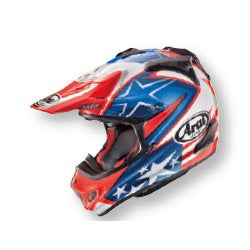
So you want to start off-roading, but you're not sure what kind of helmet to get?
For those people, we've put together our "Recommended Off-Road Helmets." The best choice will vary depending on your intended use and purpose, so we hope this article can serve as a guide.
For those people, we've put together our "Recommended Off-Road Helmets." The best choice will vary depending on your intended use and purpose, so we hope this article can serve as a guide.
Table of Contents
- 1. What do you want to do first?
- 2. Overlooked Features
- 3. Standards and Certifications
- 4. Recommendations
1. What do you want to do first?
Do you want to do enduro, motocross, or trials on serious competition models like GASGAS, Husqvarna, or BETA?
Or do you want to ride forest roads and rocky trails on street-legal models from the four domestic manufacturers (Honda, Kawasaki, Yamaha, Suzuki) or KTM? The necessary elements will change depending on your answer. Also, off-road model designs differ significantly from on-road models, so some might simply say, "It looks cool, I want to use it!" With that in mind, let's start with an overview. The main features of off-road helmets are their prominent visor and chin guard.
Or do you want to ride forest roads and rocky trails on street-legal models from the four domestic manufacturers (Honda, Kawasaki, Yamaha, Suzuki) or KTM? The necessary elements will change depending on your answer. Also, off-road model designs differ significantly from on-road models, so some might simply say, "It looks cool, I want to use it!" With that in mind, let's start with an overview. The main features of off-road helmets are their prominent visor and chin guard.
These two protrusions are not only attractive design elements but also serve significant functional purposes.
As some of you might guess from its brim-like shape, the visor primarily offers protection from sunlight and rain.
Most importantly for off-roading, it also acts as a shield against dirt and mud.
Whether you're racing or touring, riding on rough terrain often means dust and mud get kicked up and fly at you.
This visor is there to protect your vision from them.
Next, the chin guard creates a large space around your mouth, making breathing easier.
Haven't you often heard stories about goggles or visors fogging up from breath?
Off-road riding is surprisingly physically demanding, so the ease of breathing when you're out of breath and the ease with which moist air escapes directly contribute to comfort.
Additionally, this large space prevents your mouth and teeth from hitting anything in the event of a fall.
While there's certainly a risk of falling during off-road riding, these two protrusions take the initial impact, significantly absorbing the shock even if you hit your head.
Beyond their appearance, off-road helmets are packed with essential features for off-road riding.
2. Overlooked Features
Next, and this isn't just limited to off-road helmets, you'll want to check how much of it can be washed.
Especially with cheaper or older models, some interiors cannot be removed and washed, so it's probably safer to assume that off-roading is a sport where you'll get covered in sweat and mud.
Especially with cheaper or older models, some interiors cannot be removed and washed, so it's probably safer to assume that off-roading is a sport where you'll get covered in sweat and mud.

3. Standards and Certifications
Lastly, standards and certifications. This is for those who are serious about off-roading, but if you're planning to participate in official races, you'll be required to wear an MFJ-certified helmet.
Please check the MFJ website for details, but be careful not to have to buy a new one later. For everyone else, as long as you choose a helmet with standards like JIS, SG, or SNELL, there shouldn't be any major problems.
Please check the MFJ website for details, but be careful not to have to buy a new one later. For everyone else, as long as you choose a helmet with standards like JIS, SG, or SNELL, there shouldn't be any major problems.
4. Recommendations
With all that in mind, I'd like to recommend some off-road helmets.
Shoei VFX-WR

Personally, this helmet is so well-made that you can pretty much just wear it and have no problems.
It's a "light," "comfortable," and "safe" helmet.
While it meets the rigorous safety standards of major manufacturers, including an emergency quick-release system, it's incredibly comfortable!
Many Shoei helmets are designed with excellent aerodynamics, and this is one of them.
Beyond preventing wind buffeting and wind noise, its ventilation performance honestly surpasses other helmets by a head and shoulders.
As mentioned earlier, off-road riding generates a lot of sweat and heat, so the inside of the helmet can get quite stuffy.
No matter how washable it is, staying cool while riding is always better.
In that regard, this helmet is simply cool.
You can clearly feel how large the air intake and outlet are and how seamlessly they connect when you wear it.
It's such a highly recommended helmet that it's frustrating you can't truly experience its performance without using it.
Arai V-Cross 4

This helmet is for those who prioritize safety and want to avoid injuries, with a particular focus on safety performance.
It's a beautifully curved helmet with a "safety design that uses continuous smooth R-shapes."
This is a characteristic that emerges when comparing Shoei and Arai: Arai helmets are generally built a bit tighter.
Of course, cheek pads will gradually conform to your face with use, so some breaking-in is necessary. Even considering that,
Arai helmets tend to have a stronger fit, giving the impression that they won't shift or wobble even under significant impact.
It's a rugged helmet that fulfills the requirements for off-road riding, which involves vigorous movement.
Finally, as a reference for off-road helmets, I'd also like to introduce a touring helmet.
Unlike off-road helmets, which are designed for goggles in competitive settings, this type of helmet covers that area with a shield, similar to an on-road helmet.
Its target audience includes riders of popular adventure-type vehicles like the Honda Africa Twin and BMW R1200GS, which are also strong performers on public roads.
Unlike regular full-face on-road helmets, the brim offers strong protection from sun and rain. However, it's generally a size smaller than off-road helmets, with aerodynamics and other factors taken into consideration.
This might be a good compromise for those who want to enjoy both on-road and off-road riding, so please consider it as a reference.
Shoei Hornet ADV

This helmet is a prime example of a touring helmet that you can wear for long periods without getting tired.
Not only is it suitable for on-road riding as is, but it's also designed for off-road riding and allows for goggle use.
As it's primarily a touring helmet, ventilation has been thoroughly implemented.
The removable ear pads allow for precise adjustment of the space around the ears, enabling fine-tuning of the fit.
This also significantly reduces strain when wearing internal earphones or glasses.
Furthermore, by using different urethane materials in the cheek pads, it's designed to prevent pressure on the temples when wearing glasses or sunglasses.
These new pad materials also offer twice the moisture absorption and release, as well as a cool-to-the-touch sensation, compared to conventional materials, providing a level of comfort that far surpasses inferior full-face helmets.
I believe it's one of the helmets that perfectly meets the current needs of the off-road and on-road mainstream.
Recommended Products
Latest Articles

Popular product


×
![]()