



Mar 30, 2026
[New Standards] Motorcycle Engine Displacement Categories: Maintenance Costs, Traffic Rules, and Licenses for Each Displacement
Is it true that motorcycle helmets only last three years? How to determine their lifespan and when to replace them.
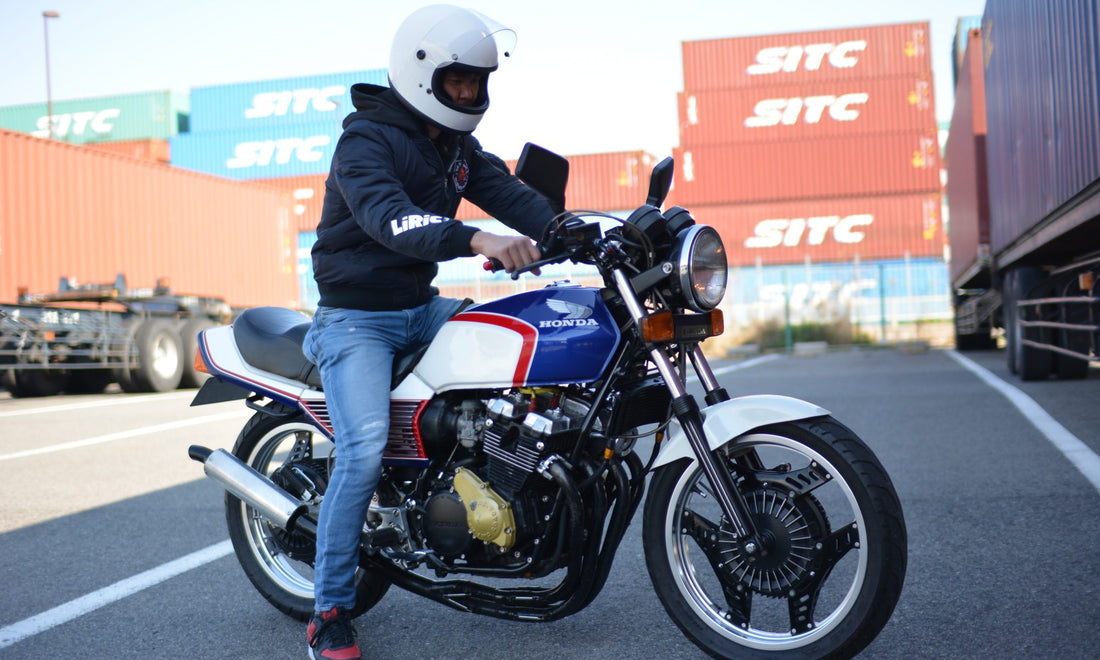
This article thoroughly explains the lifespan, useful life, and situations in which you should replace your motorcycle helmet.
"I've been using my motorcycle helmet for a long time, but is it still usable?" "I dropped my motorcycle helmet, should I buy a new one?"
This article is written to answer such questions, so by reading it, you will gain correct knowledge about motorcycle helmets that protect your life.
Please read this article and use it as a reference when using a motorcycle helmet to protect your life.
What is the lifespan/service life of a motorcycle helmet? Is it a lie that it's 3 years?

Motorcycle helmets also have a service life and a lifespan, and cannot be used forever.
Motorcycle helmets are quite expensive and difficult to replace frequently, so you'd probably want to keep using them as long as possible.
However, motorcycle helmets are meant to protect your head, and thus your life, so they need to be replaced periodically to maintain their performance, and that period is often said to be 3 years from the time of purchase.
What is the basis for the 3-year service life/lifespan of motorcycle helmets?
Motorcycle helmet lifespan/service life is 5 to 7 years
The origin of the idea that a motorcycle helmet's lifespan or service life is 3 years comes from the service life specified by well-known Japanese motorcycle helmet manufacturers.
Arai and SHOEI, major Japanese motorcycle helmet manufacturers, state the following regarding the service life of motorcycle helmets on their official websites:
Arai's set service life for motorcycle helmets
Arai Helmet sets the service life for motorcycle helmets as follows:
Arai Helmet recommends replacement after approximately 3 years from the start of helmet use, based on the validity period of the SG Mark.
Source: Arai Helmet Ltd. FAQ
Arai, based on the SG Mark, defines the service life as 3 years from the first time a motorcycle helmet is worn.
SHOEI's set service life for motorcycle helmets
SHOEI sets the service life for motorcycle helmets as follows:
Helmets may not maintain the same performance as new due to age-related deterioration from use. For this reason, the SG Mark specifies its validity period as "3 years after purchase." We recommend replacing the helmet after approximately 3 years of use, even if no abnormalities are observed with normal use.
Source: SHOEI Co., Ltd. Regarding Helmet Use
SHOEI, like Arai, states that they set the service life of motorcycle helmets at 3 years, based on the SG Mark.
So, what exactly does the SG Mark, which is the standard for both companies' service lives, define?
What is the SG Mark?
The SG Mark indicates products that have been certified to meet or exceed certain safety standards, primarily for everyday household items.
SG stands for "Safe Goods," and it is a mark approved for products that clear the safety standards set by the "Product Safety Association."
The SG Mark applies to over 100 product categories, including not just motorcycle helmets, but also leisure goods, infant and child products, welfare products, and household goods, with safety standards varying for each product.
In the case of motorcycle helmets, the service life is set at 3 years in accordance with the standards defined by the SG Mark.
Summary of lifespan/service life advocated by each manufacturer
The recommended service life for motorcycle helmets from manufacturers like Arai and SHOEI is 3 years from the date of purchase or first wear.
The service life of motorcycle helmets is set at 3 years, in accordance with the service life defined by the "SG Mark," which certifies the safety of everyday household products.
Is the 3-year lifespan advocated by famous manufacturers a lie?
The widespread belief that a motorcycle helmet's lifespan or service life is 3 years originated from standards set by motorcycle helmet manufacturers.
Motorcycle helmet manufacturers set it at 3 years because they adopt the service life defined by the SG Mark, so it's not a lie.
Also, it doesn't mean it becomes unusable immediately after 3 years; if used without strong impacts, a motorcycle helmet can last about 5 to 7 years (the period varies depending on the usage environment).
Arai and SHOEI have aligned with the SG Mark standard and set the period at 3 years as "the period during which the quality and performance of a motorcycle helmet can be most reliably demonstrated."
The possibility of not selling immediately is also taken into account.
Motorcycle helmets don't always sell immediately when displayed in stores. Some may remain on shelves for a year, two years, or even longer.
Since the selling period for motorcycle helmets varies, if the lifespan is set at 3 years from the date of manufacture, some helmets might only be usable for a short time depending on the purchase timing.
Therefore, helmet manufacturers consider the possibility of extended shelf time and produce helmets that can be used for at least "3 years from the time of purchase."
If a helmet sits in stock for two years and is then purchased, it would need to be usable for five years. If it sat in stock for four years, it would need to be usable for seven years, indicating that the service life of a motorcycle helmet is longer than the three years set by the manufacturer.
In addition to this, Japanese-made motorcycle helmets are inherently high-quality, so the deterioration of the internal shock-absorbing material is slow, and a service life of 5 to 7 years is generally considered typical for motorcycle helmets.
Can a dropped helmet not be used? Determining lifespan and replacement目安 (guidelines)

It is often said that if a motorcycle helmet has been subjected to impact, it should be replaced for safety.
Also, while helmets have a defined service life, it can be difficult to remember when it was purchased after extended use.
How should one determine when to replace a motorcycle helmet?
First, regarding situations where a motorcycle helmet has been subjected to impact, Arai provides the following information on their website:
Helmets are designed to absorb impact and protect the head by partially breaking when subjected to impact. Therefore, a helmet that has been impacted while being worn, even if no major scratches are visible on the surface, has internal structural damage due to the impact absorption process.
If a helmet has been subjected to a strong impact even once, do not continue to use it. Please send the helmet to our quality control department with an explanation of the accident circumstances to request an inspection to determine if it can be reused, or purchase a new helmet.
Source: Arai Helmet Ltd. FAQ
If a helmet experiences a strong impact in an accident, the internal shock-absorbing material may be damaged.
It is dangerous to continue using it, so it is advisable to replace it with a new helmet.
If you have an Arai product, you can request an inspection from Arai to see if it's still usable. (Inspection is free, but round-trip shipping is at your own expense.)
Since it's a helmet that protects your life, for your safety, it's better to replace it if it has received a strong impact even once.
It would be a false economy to risk your life to save a few tens of thousands of yen.
Next, let's look at how to determine the lifespan of a helmet that has been used without strong impacts.
Lifespan Assessment Point 1: Use the 3-year service life as a standard
One way to determine the lifespan of a motorcycle helmet is to use the manufacturer's recommended service life of 3 years as a standard.
At least for the helmet manufacturer's 3-year service life, there is almost no deterioration of the helmet material, and the helmet's safety is maintained.
Those who want to wear a helmet while maintaining higher safety should use the manufacturer's specified service life as a standard.
Lifespan Assessment Point 2: Assess by the condition of the helmet's internal padding
Assessing by the condition of the helmet's internal padding (liner) is also one way to determine its lifespan.
When worn, a motorcycle helmet functions by having the liner adhere closely to the face; if the liner becomes worn out, gaps can form, making the helmet prone to movement.
If the helmet moves, it can lead to injuries due to the helmet shifting during accidents, so it's a good idea to consider the helmet's lifespan to be over when the liner becomes worn out.
Lifespan Assessment Point 3: Request an inspection from the manufacturer
If you use an Arai product, you can also have it inspected to find out if it's still usable after a strong impact from an accident.
The inspection fee is free; you only pay for the round-trip shipping costs to send the helmet.
If a helmet has been subjected to a strong impact even once, do not continue to use it. Please send the helmet to our quality control department with an explanation of the accident circumstances to request an inspection to determine if it can be reused, or purchase a new helmet.
Source: Arai Helmet Ltd. FAQ
For those who find it difficult to afford a new helmet, getting an inspection for just the round-trip shipping cost is a welcome option.
If you have an attachment to your helmet, even after an accident, it's a good idea to send it for inspection to ensure it can be used safely for as long as possible.
When the smell bothers you while wearing it
If you notice an odor when wearing your motorcycle helmet, it's a good idea to wash it or consider replacing it.
The helmet liner is designed to absorb sweat.
Therefore, it can prevent sweat from running down your face, even during sweaty seasons like summer, but if you don't wash it regularly, the absorbed sweat's odor can fill the helmet.
Also, if the liner isn't dried thoroughly after washing, it might still have a damp odor.
If odors start to occur more frequently with extended use, and washing doesn't easily remove them, or if the smell becomes bothersome, you might consider replacing the helmet.
Can a dropped helmet not be used?
If you accidentally drop your motorcycle helmet on the ground, you can still use it.
Arai explains it as follows:
It's fine if it's dropped by accident from the seat of a motorcycle, or from about arm's length, even if the ground is concrete. If only the exterior paint is chipped, there's no problem with safety performance.
Source: Arai Helmet Ltd. FAQ
It states that even if dropped from the seat of a motorcycle or from arm's height (around 70-80cm) to the ground, the helmet's safety is maintained.
It also states that even if the helmet's exterior gets scratched or peeled during this, it can still be used without problems.
However, if the helmet is strongly impacted in an accident or similar situation, it is dangerous to continue using it as is.
Immediately replace a helmet involved in an accident!
If you're in an accident, replace your motorcycle helmet immediately.
When a helmet receives a strong impact in an accident, the internal cushioning and other impact-absorbing materials compress to protect your head.
Once a helmet receives a strong impact, its internal shock-absorbing material will not recover, rendering the helmet no longer functional.
Continuing to wear it means it won't protect your head in the next accident.
Also, even if you don't feel like you hit your head in an accident, you may have, so to be safe, it's better to replace a helmet involved in an accident.
Helmets can be replaced, but lives cannot.
Can a 10-year-old unused helmet still be used?
Even if it's unused, a 10-year-old helmet is not recommended.
The reason is that the internal shock-absorbing material and the helmet surface may have deteriorated over time.
In particular, the internal shock-absorbing material in helmets hardens with deterioration and loses its ability to absorb impact effectively.
If safety is your top priority, it's best not to use old helmets, even if they are unused.
How to Make Your Motorcycle Helmet Last Longer!

Source: https://pixabay.com/ja/photos/
The service life/lifespan of a motorcycle helmet is 3 years as recommended by manufacturers, but actually about 5-7 years, and its lifespan can be either longer or shorter depending on how it's handled.
Here are three ways to make your helmet last longer, focusing on how handling affects its lifespan.
1. Avoid direct sunlight as much as possible
The exterior of a motorcycle helmet is made of plastic resin such as FRP, so direct sunlight can accelerate its deterioration.
While it's impossible to avoid direct sunlight while riding with a helmet on, store your helmet in a place away from direct sunlight when not in use.
In addition to avoiding direct sunlight, the helmet's inner lining is not resistant to humidity, so it's best to store it in a place with low humidity and good ventilation.
By avoiding direct sunlight as much as possible and paying attention to storage, you can extend the life of your helmet.
2. Clean it regularly
The exterior of a motorcycle helmet is constantly exposed to dirt from dust, insects, and rain, so cleaning it regularly will extend its lifespan.
Furthermore, the helmet's inner lining absorbs sweat, so leaving dirt on it can also lead to the helmet's deterioration.
For the exterior, gently wipe it with a cloth or apply a water-repellent wax coating to prevent dirt from adhering.
If the helmet's inner lining is removable, occasionally remove it and air-dry it in a well-ventilated, shaded area to dry the inside of the helmet.
Keeping your helmet consistently clean is the key to making it last longer.
3. Wash the inner lining thoroughly, especially in summer
Motorcycle helmets, especially in sweaty seasons like summer, absorb a lot of sweat in their inner lining, so if the inner lining is removable, make sure to remove and wash it frequently.
Leaving sweat in it can cause odors and accelerate the deterioration of the inner lining.
During sweaty periods, it's best to remove the inner lining frequently and gently hand wash it.
Avoid washing the inner lining in a washing machine, as it can cause deformation.
5 Highly Cost-Effective Helmets Recommended for Replacement!

Source: https://bikeman.jp/products/gt-750
If a motorcycle helmet has been subjected to a strong impact even once, its safety is compromised, so prompt replacement is necessary.
Also, helmets that are deemed to have reached their lifespan, such as when the internal padding has become worn out, need to be replaced.
However, helmets can be quite expensive, so replacement might not happen easily.
Therefore, we recommend highly cost-effective helmets with an SG Mark, which certifies products with recognized safety.
All the motorcycle helmets introduced are affordable in terms of both safety and price.
VERTEX Race Helmet GT750 with Bonus Shield Nostalgic

Source: https://bikeman.jp/products/gt-750
The "VERTEX Race Helmet GT750" is a very popular vintage-style helmet with a simple, somewhat nostalgic feel.
It meets SG/PSC standards and features a one-touch buckle chin strap that makes it easy to attach and detach even with gloves on.
The size is free size (57cm-60cm), and it has an inner design that fits many people, which is also removable.
It comes in 6 colors: white, black, matte black (non-glossy black), ivory, red, and yellow, making it easy to match with your bike or preference.
A clear shield is included as standard.
VERTEX GT751 Helmet Race Helmet with Bonus Shield Nostalgic

Source: https://bikeman.jp/products/gt
The "VERTEX GT751 Helmet Race Helmet" is a distinctive helmet with vent designs at the top and chin.
It meets SG/PSC standards and comes with a clear shield as standard. The size is free size (57-60cm).
It features a one-touch buckle for easy chin strap attachment and detachment even with gloves on, and the inner lining is removable.
It comes in 4 colors: white, black, matte black, and ivory.
VERTEX Vintage Helmet Off-Road GT503

Source: https://bikeman.jp/products/gt503
It meets SG/PSC safety standards and comes in 4 colors: white, black, matte black, and ivory.
It features a one-touch buckle for easy chin strap attachment and detachment even with gloves on, and the inner lining is removable for easy washing. The size is free size (57-60cm).
VERTEXGT750 Race Helmet CBX with Bonus Shield

Source: https://bikeman.jp/products/gt-750
The "VERTEXGT750 Race Helmet CBX" is a popular vintage-style helmet with a retro, timeless design, featuring blue and red color schemes.
It meets SG/PSC safety standards and has a removable inner lining for easy washing, especially in summer.
The helmet top comes in two colors, blue and red, and the chin strap features a one-touch buckle for easy attachment and detachment.
The size is free size (57-60cm).
VERTEX GT750 Race Helmet Z2 with Bonus Shield

Source: https://bikeman.jp/products/gt-750
The "VERTEX GT750 Race Helmet Z2" is a retro-shaped helmet with eye-catching, vibrant coloring.
With coloring that matches its simple vintage shape, this helmet exudes the nostalgia of a bygone era.
It comes in five colors: Knuckle Line Red, Knuckle Line White, Z400FX E4 Color, Z2 Orange, and Z2 Yellow.
It meets SG/PSC standards, has a removable inner lining, and features a one-touch buckle chin strap for easy attachment and detachment even with gloves on.
When replacing your helmet, choose a high-cost-performance model with safety certification!
This time, we introduced the lifespan and service life of helmets, how to assess them, and recommended high-quality helmets.
If you're considering a replacement, it's a good idea to choose a helmet with SG/PSC certification for safety, and a simple, timeless design like the ones introduced.
All of these helmets are especially recommended for riders of classic and naked bikes.
Of course, the combination with your bike is entirely up to you, so it's fine to use them with any type of bike, whether classic or naked. The advantage of simple helmets is their versatility with various bikes.
Since it's an important item that protects your life, it's crucial to properly understand the lifespan of your helmet.
Recommended Products
Latest Articles

Popular product


×
![]()