



Mar 30, 2026
[New Standards] Motorcycle Engine Displacement Categories: Maintenance Costs, Traffic Rules, and Licenses for Each Displacement
[Latest 2021] Is ABS necessary for motorcycles? It's mandatory, but let's understand the pros, cons, and mechanism.
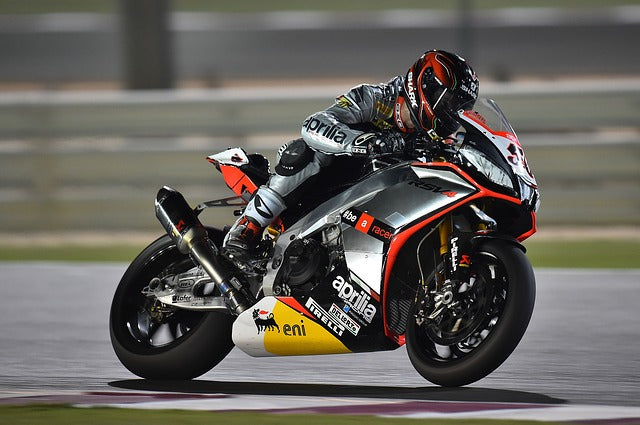
What is ABS? Purpose and Mechanism

Source: https://news.bikebros.co.jp/topics/news20150122/
ABS (Anti-lock Brake System) is a "brake assist system" that prevents tires from locking up when sudden braking occurs.
It is an abbreviation of its full name, "Anti-lock Brake System."
Tire lock is a phenomenon where the rotation of the tires stops due to braking, and it is prone to occur on rainy days or sandy surfaces where road friction is low.
ABS intervenes in situations where a lock-up is likely to occur, based on differences in rotational speed between the front and rear wheels detected by sensors.
When a potential lock-up is detected, ABS rapidly applies and releases hydraulic pressure to the brakes, suppressing the lock-up and adjusting the braking force to achieve maximum deceleration.
For motorcycles, locking the front tire in particular significantly increases the risk of a fall, but ABS suppresses tire lock-up, preventing the risk of skidding and falling.
Systems similar to ABS
A system similar to ABS is CBS.
CBS stands for "Combined Brake System," and it is a system that detects braking on either the front or rear wheel and assists the other brake to provide stopping power.
Even if only one brake is applied, CBS assists the other brake, allowing riders who are not good at applying both brakes simultaneously to brake in a balanced manner.
CBS has a longer history than ABS, with Honda first installing it on a racing machine in 1976. However, due to its simpler structure compared to ABS, it is often adopted in small-displacement vehicles like mopeds.
Mandatory in Europe
In Europe, the installation of ABS or CBS on motorcycles has been mandatory since 2016, and new vehicles without it cannot be sold.
Even before ABS was mandated, approximately 5,000 people died in motorcycle accidents in Europe in 2011 alone. ABS was mandated in an effort to reduce the number of fatalities from motorcycle accidents.
For small displacement vehicles such as 50cc, ABS or CBS is mandatory, and for medium and larger models, ABS is mandatory.
4 Advantages of ABS

Source: https://www.honda.co.jp/NC750X/design/
The main advantages of ABS are:
- Prevents tire lock-up
- Allows you to concentrate on riding
- Stable stopping regardless of road conditions
- Provides good assistance even if you are not good at braking
Let's look at them one by one.
Advantage 1: Prevents tire lock-up
With ABS, you can stop stably without locking up the tires, even during sudden braking.
When driving in urban areas, children may suddenly run out from the side of the road.
In such cases, panic braking often occurs, where the brakes are applied forcefully. However, even in such emergencies, braking can be performed without locking the tires.
Advantage 2: Allows you to concentrate on riding
The reassurance of excellent brake assistance allows you to concentrate on riding.
Although ABS is an auxiliary system for riders and should not be over-relied upon, the assistance with braking can be a significant mental relief.
Advantage 3: Stable stopping regardless of road conditions
With ABS, stable braking force can be exerted regardless of the road surface.
Even on slippery road surfaces where hydroplaning can occur, ABS allows you to maintain your posture and stop, so the ability to brake regardless of road conditions is another advantage of ABS.
However, it is important to remember that ABS is merely an auxiliary system for the rider and is not foolproof.
Advantage 4: Provides good assistance even if you are not good at braking
Since the tires don't lock up even with sudden braking, even those who are not good at braking can brake with confidence.
The sense of security that the brakes will be well-assisted is also an advantage of ABS.
4 Disadvantages of ABS

Source: https://pixabay.com/ja/photos/ae-6682205/
After discussing the advantages of ABS, let's also look at its disadvantages.
The disadvantages are:
- Increased motorcycle price
- Increased vehicle weight
- Higher repair costs
- Intervention can be disruptive depending on driving conditions
Let's look at them in order.
Disadvantage 1: Motorcycle price increases
One disadvantage of equipping ABS is the higher price of the motorcycle.
For motorcycles that were offered in models with and without ABS, the ABS-equipped versions were typically 30,000 to 50,000 yen more expensive. While it's an excellent safety feature, the cost of ABS is added to the motorcycle's price, leading to a higher overall cost.
As of November 2021, new motorcycles without ABS cannot be sold, so many models that were previously available without ABS will likely see price increases.
Disadvantage 2: Increased vehicle weight
The increased vehicle weight due to the installation of ABS is also a drawback. Although recent ABS systems have become smaller and lighter due to technological advancements, they still add about 2 to 3 kilograms to the vehicle's weight.
Older motorcycle models with ABS sometimes saw an increase of over 10 kilograms, and this added weight could lead to slower acceleration and heavier handling in corners.
The unavoidable increase in weight is also a disadvantage of ABS.
Disadvantage 3: Increased number of parts leads to higher failure rate
A motorcycle is made up of many parts, and the more parts it has, the higher the failure rate tends to be. Since installing ABS increases the number of parts, the failure rate will likely also increase.
While the failure rate theoretically increases, Japanese manufacturers often have strict quality control, leading to a relatively low tendency for breakdowns.
Disadvantage 4: Intervention can be disruptive depending on driving conditions
During circuit riding or gymkhana competitions, in limited environments, ABS may intervene by misjudging the rotational difference between the front and rear wheels that occurs when the bike is deeply leaned (when the body is tilted).
While ABS is often useful in urban riding, such as responding to sudden obstacles, its intervention can be a hindrance during sport riding, which can be considered a disadvantage.
Is ABS on motorcycles necessary or unnecessary? Some say it "saved their lives."

Source: https://pixabay.com/ja/photos/b7-1829461/
The topic of whether ABS is necessary or unnecessary on motorcycles sometimes comes up, but I believe it is necessary.
When riding in urban areas or touring, people or objects may suddenly appear, and sometimes unpredictable events occur.
In sudden situations, panic braking is common, and locking the front tire carries an immediate risk of falling. Therefore, ABS can reduce the danger in emergencies.
Some say ABS saved them and they can't go back to riding without it.
Feedback from riders of ABS-equipped motorcycles includes comments such as ABS intervention saving them multiple times on circuits and mountain passes, and ABS allowing them to safely stop in situations where they couldn't make a turn.
Conversely, those who argue against ABS say that when ABS activates, it causes jerky behavior.
It was also said that the jerky motion could disrupt the rider's posture and pose a risk of falling, but current ABS systems operate smoothly due to technological advancements.
If there are wet and dry patches on the road after rain, braking without ABS would require a cautious approach, but with ABS, you can brake regardless of the road conditions.
For these reasons, except for extreme sports that intentionally lock the brakes for performance, it is generally better to have ABS.
Motorcycle ABS became mandatory as standard equipment from October 2018.

Source: https://pixabay.com/ja/photos/88-1001872/
From October 1, 2018, the installation of ABS or CBS (for small displacement vehicles) became mandatory for new models sold (including minor and major changes).
Motorcycles introduced as new models after October 2018 come standard with ABS. Therefore, if you want an ABS-equipped motorcycle, it's a good idea to choose a model you like while considering its release year.
While ABS has been mandatory in Europe since 2016, Japan is following a similar trend.
Mandatory for all vehicle types from October 2021
From October 1, 2021, the installation of ABS or CBS became mandatory for all new vehicles sold, and new vehicles without either cannot be sold.
Models that have been sold since before October 2018 were exempt from the ABS mandate.
However, with ABS or CBS now mandatory for all new vehicles sold, Japan has aligned with European standards, which are considered advanced in safety.
How to tell if a motorcycle has ABS or how to check?

Source: https://www.8190.jp/bikelifelab/useful/supplies/200916/
You can tell if a motorcycle has ABS by checking for a pulse sensor or a code near the brake caliper.
A pulse sensor is a circular part located near the brake caliper, often found inside the brake disc rotor. The code is easily identifiable as it connects to the caliper.
Additionally, when you turn the ignition ON, if the model is equipped with ABS, an ABS indicator light will illuminate on the meter panel, which also serves as a confirmation.
Even for the same model, there are almost no external differences between ABS and non-ABS versions.
Can ABS be retrofitted to a motorcycle?

Source: https://motorz.jp/race/bike/101136/
While kits are available to convert a motorcycle to ABS, so it is technically possible to retrofit ABS, it won't be as effective as factory-installed ABS.
Commercially available ABS conversion kits generally work by simply releasing hydraulic brake pressure during sudden braking.
In contrast, factory-installed ABS systems use sensors to instantly analyze road conditions, reduce engine speed, and prevent tire lock-up, intervening precisely as needed for the situation.
Similar systems are not sold, and even if custom-made, it would be difficult to create the electronic engineering components such as sensors and control units that send commands based on sensor data.
Is motorcycle ABS unnecessary? Is there a possibility of malfunction if it is disabled?

Source: https://pixabay.com/ja/photos/88-1620027/
Motorcycle ABS can be forcibly disabled by removing the ABS fuse and disconnecting the wiring connected to the sensor.
When ABS was first introduced, its performance wasn't as good as it is today, so some people intentionally disabled it. However, current systems have improved, with the ECU analyzing information from sensors to accurately judge road conditions.
Since ABS is controlled based on information transmitted to the ECU, disabling ABS may cause the ECU to detect an abnormality in the motorcycle, potentially affecting other functions.
In some cases, it may be judged as a malfunction, causing the engine check warning light to remain illuminated. Therefore, if you don't need ABS, it's better to look for a model that doesn't have it installed.
However, new vehicles sold after October 2021 cannot be sold without ABS (or CBS), so it's no longer possible to purchase a new vehicle without it.
Are there motorcycles with ABS only on the front wheel?

Source: https://www.honda.co.jp/PCX/type/
Honda's PCX150 has ABS only on the front wheel.
Since the rear brake is a cable-operated drum brake, it seems that ABS is only on the front wheel due to the difficulty and cost of converting the rear brake to ABS. The fourth-generation PCX (PCX160), which appeared in 2021, has an engine displacement of 160cc and features disc brakes on both the front and rear wheels.
Summary

Source: https://pixabay.com/ja/photos/88-5272906/
Since October 2021, new motorcycles sold must be equipped with ABS or CBS, and models without ABS are no longer available.
When ABS first appeared, its braking was unreliable, and its jerky behavior led some riders to disable it.
Today, however, performance has improved, with ABS being controlled via the ECU, making it so advanced that it is now considered difficult to ride a motorcycle without ABS, whether for city commuting or circuit riding.
As ABS has evolved, those who prefer less intervention from ABS should consider riding the latest models equipped with more advanced ABS.
Recommended Products
Latest Articles

Popular product


×
![]()